
What Is the Best Battery Go Kart to Buy in 2026?
Choosing the best Battery Go Kart in 2026 is not just a matter of speed. The right model should fit the driver, the available track space, and the way the kart will be used. A quick lap can look impressive; steady handling and predictable power matter just as much. Battery performance also depends on practical details, including charging time, operating temperature, and how easily the pack can be inspected or replaced.
A real expert quotation cannot be responsibly attributed without a verifiable source. Rather than inventing one, this guide uses a clear buying principle: “Judge the whole kart, not just its top speed.” Look closely at the motor, battery capacity, braking, frame construction, and available safety equipment. Then consider who will drive it. A compact kart for a young beginner has different needs from a faster model used by experienced adults. Small details count. Seat adjustment, tire grip, and charger compatibility can shape daily use more than a headline speed claim.
This guide compares the features that affect ownership, not just the ones that look good in a product listing. It also treats published range and speed figures cautiously; real results can vary with rider weight, surface, and driving style. Some specifications may be difficult to compare across brands. That is worth noting, not glossing over. By weighing performance against fit, durability, and support, buyers can make a more informed choice for 2026.
What Defines the Best Battery Go-Kart in 2026?
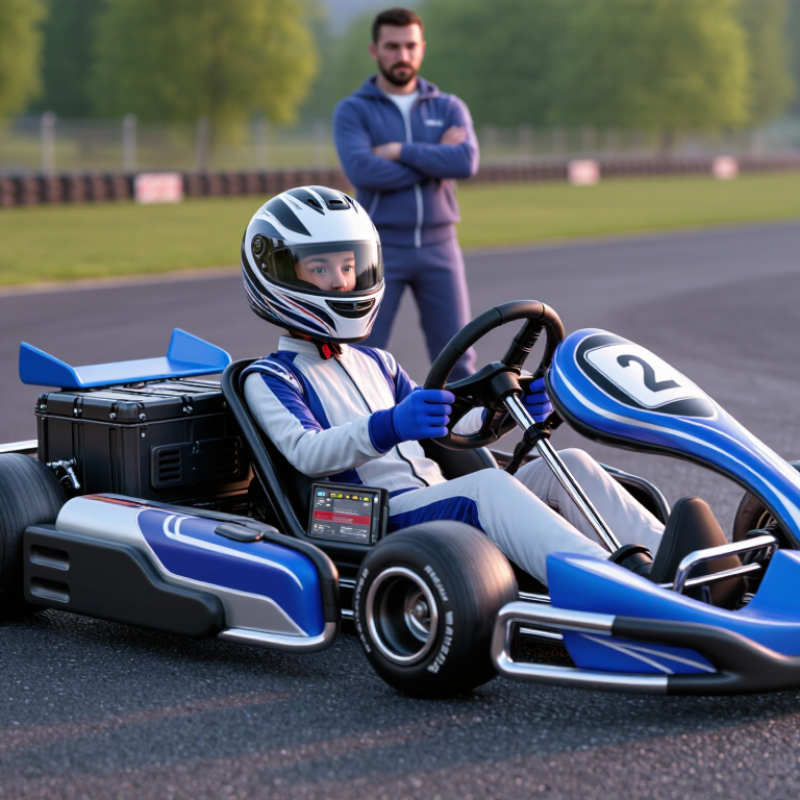
In 2026, the best battery go-kart is not simply the one with the highest advertised speed. It should match the rider’s age, size, experience, and intended riding space. A kart for smooth, private paths may need different tires and handling from one used on a compact driveway. Fit matters. The rider should sit securely, reach the controls comfortably, and keep both feet supported.
Battery performance is about more than a single range figure. Look for clear information on battery capacity, charging time, and how performance changes as the charge runs low. Real-world range can vary with rider weight, hills, surface, temperature, and repeated acceleration. A test on flat pavement may not predict a full afternoon on grass. Check whether the battery can be inspected or replaced, and whether charging instructions are straightforward. Small details count.
Brakes, a stable frame, predictable acceleration, and accessible safety controls deserve equal attention. Adjustable speed settings can help new riders build confidence without making the kart feel unresponsive. Examine the tires, welds, seat restraint, and footwell; these details are easy to overlook in polished product photos. A longer warranty and clear support information can also signal responsible ownership guidance, though they do not guarantee reliability. I would be cautious about treating any one specification as decisive. Even a promising kart may feel awkward once a rider actually climbs in.
What Is the Best Battery Go Kart to Buy in 2026? — What Defines the Best Battery Go-Kart in 2026?
The best battery go-kart is the one that fits the driver, intended riding area, and budget while providing verified safety features and practical battery support. Compare the specifications below rather than relying on a single speed or range claim.
| Buying Dimension | What to Look For | Why It Matters | How to Verify It |
|---|---|---|---|
| Driver fit and rated capacity | A clearly stated minimum age, rider-height guidance, and maximum rider weight. The seat, pedals, and restraints should suit the intended driver. | A kart that is too large or too small can be difficult to control. Exceeding its rated capacity can affect handling and component life. | Check the manual and product label. Confirm that the driver can reach the controls comfortably while seated and restrained. |
| Speed control | For a beginner or younger rider, look for a controllable low-speed setting or adjustable speed limit. Check the stated maximum speed and whether it can be limited by an adult. | Maximum speed alone does not indicate suitability. A predictable, adjustable pace is more useful for matching the kart to a rider’s experience and the available space. | Ask how speed settings work and whether the limit remains in place after restarting the kart. Test only in an appropriate, permitted area. |
| Battery capacity and type | Look for the battery chemistry, nominal voltage, capacity in amp-hours (Ah), and energy in watt-hours (Wh), when provided. Watt-hours can be estimated as volts multiplied by amp-hours. | Voltage and capacity help describe the battery, but they do not by themselves establish real-world speed or ride time. Battery chemistry affects weight, charging, lifespan, and maintenance requirements. | Request the battery specification sheet and confirm whether the battery is removable, replaceable, and covered by a stated warranty. |
| Usable ride time | Prefer a clearly explained runtime or range estimate, including the conditions under which it was measured. | Actual ride time varies with rider weight, speed, terrain, temperature, stops, and battery condition. A single advertised figure is not a guarantee. | Ask whether the estimate reflects continuous riding or mixed use, and check owner documentation for expected performance under similar conditions. |
| Charging and replacement support | A compatible charger, clear charging instructions, available replacement batteries, and stated charging time. | Charging access affects how readily the kart can be used again. A battery that cannot be replaced can limit the useful life of the vehicle. | Confirm charger input requirements, charging time, battery part availability, and warranty terms before purchase. Follow the manufacturer’s charging instructions. |
| Braking and restraint | A clearly described braking system, an appropriately fitted seat belt or restraint where specified, and accessible controls. | Braking performance and correct restraint use are essential to controlling the kart. Features and requirements vary by vehicle type and intended rider. | Read the manual for operation and inspection instructions. Check that the restraint fits the driver and that the brake can be reached and operated comfortably. |
| Frame, tires, and stability | A sturdy frame, tires suited to the intended surface, and documented limits for rider weight and operating conditions. | Surface, grip, and vehicle setup affect handling. A kart intended for smooth private surfaces may not be suitable for rough ground or public roads. | Inspect construction, tire condition, and the owner’s manual. Confirm where the kart is intended to be used and avoid surfaces excluded by the manufacturer. |
| Safety documentation | Complete operating instructions, warnings, maintenance guidance, and any applicable safety or conformity documentation for the vehicle and sales region. | Requirements differ by product category and location. A toy standard, where applicable, does not automatically establish that a larger or faster kart is suitable for every rider or setting. | Check the exact model’s documentation and local rules. Do not rely on a general safety claim without supporting documents. |
| Parts, service, and warranty | Written warranty coverage and a practical way to obtain replacement tires, brakes, chargers, batteries, and other service parts. | Parts access and repair support can matter as much as the initial purchase price over the life of the kart. | Read the warranty exclusions and ask which components are covered, for how long, and how service is arranged. |
| Total ownership cost | Compare the purchase price with likely replacement-battery costs, service parts, charging needs, and warranty coverage. | The lowest upfront price may not be the lowest-cost option if essential parts are difficult to source or require early replacement. | Request current prices and availability for the battery, charger, and common wear parts before deciding. |
Practical decision rule: Start with rider fit, speed control, and documented safety information. Then compare battery specifications, realistic ride-time evidence, replacement support, and total ownership cost. There is no universally best battery go-kart; the right choice depends on the driver and intended use.
