China Top 10 Solar Energy Systems Suppliers for Global Buyers
China’s solar manufacturing base has become central to the global clean-energy supply chain. This guide examines China’s Top 10 Solar Energy Systems suppliers for international buyers.
The market is expanding quickly. The International Energy Agency’s Renewables 2024 report expects global renewable capacity to increase by almost 6,000 gigawatts between 2024 and 2030. Solar photovoltaic technology represents most of that growth. IRENA also reported that global renewable capacity reached 4,448 gigawatts by the end of 2024, with solar contributing the largest share of new additions.
The numbers are impressive. They are not the whole story.
A reliable supplier must offer more than competitive module pricing. Buyers should assess production consistency, inverter compatibility, battery safety, warranty enforcement, certifications, logistics, and after-sales support. Factory audits, third-party testing, and traceable serial numbers can reveal weaknesses hidden behind polished brochures.
Fatih Birol, Executive Director of the IEA, called solar photovoltaic power “the new king of electricity markets” in the agency’s World Energy Outlook 2020. His statement reflects solar’s falling costs and rapid deployment. However, every project still faces local grid limits, weather variation, financing pressure, and maintenance challenges.
This selection focuses on manufacturers and integrated providers with visible international experience, substantial production capabilities, and established product portfolios. It also recognizes an uncomfortable limitation: rankings can change as prices, technology, trade policies, and supplier reliability evolve.
Choose carefully.
The strongest Solar Energy Systems partner is not always the largest company. It is the supplier that matches documented performance with your site, budget, timeline, and long-term service needs.
## Solar Energy System Supplier Landscape in China
China’s solar energy system supplier landscape is broad, export-oriented, and highly integrated. In 2024, China added about 277 GW of photovoltaic capacity, according to the National Energy Administration. Its total installed capacity exceeded 880 GW. This scale supports competitive pricing, fast production, and extensive component access.
A practical supplier review should examine more than module output. The supply chain includes polysilicon, wafers, cells, modules, inverters, batteries, mounting systems, and engineering services. The International Energy Agency’s Renewables 2024 report expects China to deliver nearly 60% of global renewable capacity growth through 2030. This creates strong sourcing opportunities for international buyers. However, large production volumes do not automatically prove project reliability. Quality records matter.
Procurement teams should check IEC test reports, factory audits, warranty terms, degradation data, and shipment performance. Independent certification helps. Local technical support can also reduce installation delays. IRENA’s Renewable Capacity Statistics 2025 confirms China remained the leading market for new solar capacity in 2024. Yet supplier comparisons remain imperfect because financial data, subcontracting practices, and after-sales performance are not always transparent. A top-ten list is useful, but it should be treated as a starting point, not a final decision. Suppliers with clear documentation and stable communication often create more value than suppliers offering the lowest quotation.
China Top 10 Solar Energy Systems Suppliers for Global Buyers
Solar Energy System Supplier Landscape in China
China’s annual newly installed solar PV capacity increased significantly from 2019 to 2023, indicating strong domestic demand and a large manufacturing base for solar modules, inverters, mounting systems, batteries, and integrated energy systems. The figures represent the overall Chinese solar PV market and do not rank individual companies or brands.
Source: National Energy Administration of China, annual renewable energy and power industry statistics.
## Criteria for Evaluating China’s Top Solar Suppliers
For global buyers, evaluating Chinese solar suppliers requires more than comparing FOB prices. IRENA’s Renewable Capacity Statistics 2024 recorded 346 GW of solar additions worldwide in 2023, about 73% of new renewable capacity. That scale increases choice, but also increases verification risk. Assess production capacity, cell technology, factory quality systems, and traceability from wafer to packed module. Request current IEC test reports, independent inspections, and serial-number records. Certificates alone are not enough.
A credible supplier should disclose annual degradation assumptions, temperature coefficients, fire classification, and warranty responsibilities. NREL’s Photovoltaic Degradation Rates—An Analytical Review commonly uses about 0.5% yearly degradation as a benchmark, yet project conditions can differ. Check the warranty issuer, claim process, replacement stock, and response times in your destination market. Review audited financial information, export references, port experience, packaging photos, and spare-part plans. Price matters. It is not the whole decision. I would score each supplier with weighted criteria, then test a small shipment before signing a large contract. This step may feel slow, but one overlooked defect can spread across thousands of panels.
Tips: Ask for a recent third-party factory audit, not a recycled PDF. Compare measured flash-test data with the datasheet. Confirm Incoterms, insurance, and local compliance in writing. Keep a sample for independent testing. No scorecard is perfect. Experienced buyers should revisit assumptions when tariffs, shipping routes, or standards change.
## Profiles of the Top 10 Solar Energy System Suppliers
China Top 10 Solar Energy Systems Suppliers for Global Buyers
The leading Chinese solar energy suppliers serve different project needs, rather than offering identical solutions. One focuses on utility-scale systems and provides detailed production forecasts. Another designs compact rooftop packages for homes and small businesses. A third combines solar panels, batteries, and energy management software for unstable grids. Its remote monitoring dashboard is useful, but internet access remains a weakness. A fourth supplier builds agricultural solar structures, allowing crops to grow beneath elevated panels.
A fifth profile centers on commercial rooftops, with careful attention to roof loading and cable routes. The sixth supplies containerized storage systems for factories, ports, and remote facilities. Its thermal management design deserves close inspection.
A seventh specializes in off-grid systems for villages, clinics, and telecommunications sites. A strong eighth supplier offers customized inverters and protection equipment for harsh climates. However, buyers should verify local service capacity before signing.
The ninth supplier supports large export projects with multilingual documentation, factory inspections, and structured testing records. The tenth profile combines engineering, procurement, and installation support, helping buyers coordinate complex schedules.
Field experience shows that clear warranty terms matter as much as advertised efficiency.
Ask for test reports, component traceability, spare-parts plans, and references from similar climates. Some suppliers present impressive factory images but provide limited evidence of long-term operating performance. That gap deserves attention. Procurement decisions should compare degradation assumptions, response times, safety procedures, and grid-connection experience, not only the lowest quotation.
## Product Range, Manufacturing Strength, and Certifications
China Top 10 Solar Energy Systems Suppliers for Global Buyers
Product Range, Manufacturing Strength, and Certifications
Global buyers should examine a supplier’s complete product range, not only its panel price. Strong manufacturers often provide photovoltaic modules, string inverters, hybrid inverters, lithium battery storage, mounting structures, monitoring tools, and complete residential or commercial systems. This wider range can simplify system matching and after-sales coordination. However, a broad catalogue does not always mean strong engineering. Buyers should request datasheets, compatibility lists, warranty terms, and recent project references.
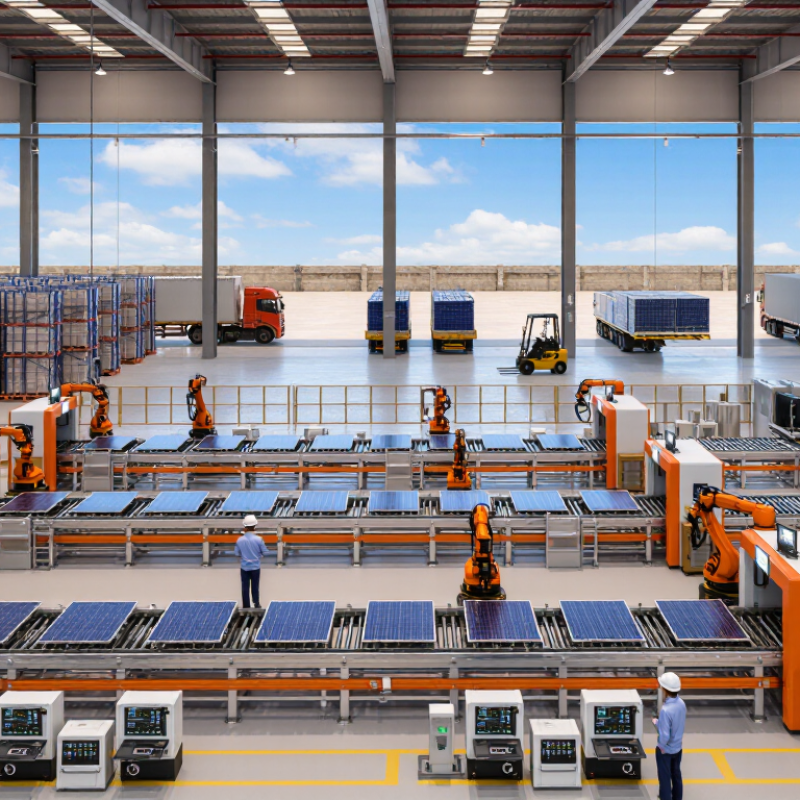
Manufacturing strength appears in the details. Look for automated cell or module lines, barcode-based traceability, electroluminescence testing, flash testing, and climate chambers. A reliable factory should explain its quality checkpoints clearly. Production capacity also matters during seasonal demand. Some suppliers advertise large annual output but outsource critical processes. That can weaken consistency. An independent factory audit may reveal more than a polished website.
Certification documents require careful checking. Modules commonly need IEC 61215 and IEC 61730 testing, while inverters may require IEC 62109 compliance. Battery systems should show relevant safety testing, such as IEC 62619 and UN 38.3, where applicable. ISO 9001 supports quality management, while ISO 14001 reflects environmental practices. Regional marks, including CE or UL, must match the destination market and product model. Small certificate details matter. A mismatched model number can delay customs clearance or project approval. No factory is flawless, so buyers should assess corrective-action records, inspection reports, and technical support before signing a long-term contract.
## Export Support, Pricing Factors, and Buyer Selection Guide
China Top 10 Solar Energy Systems Suppliers for Global Buyers
Choosing among China’s top solar energy systems suppliers requires more than comparing catalog prices. Export-ready suppliers should provide clear quotations, product datasheets, test reports, warranty terms, and installation guidance. Ask whether they have handled shipments to your destination. Their experience with local customs can prevent costly delays. A supplier offering panels, inverters, batteries, and mounting equipment together may simplify procurement. However, bundled products are not always the most economical choice.
Pricing depends on system capacity, component quality, battery chemistry, order volume, packaging, freight, insurance, and payment terms. Confirm whether the quotation uses FOB, CIF, or another delivery term. Request a complete cost sheet. Hidden expenses often appear in replacement parts or remote-site support. A low quote can look attractive. It may also reflect weaker testing or limited after-sales service. I would not select a supplier based on price alone.
Tips:
Compare at least three written quotations. Check production capacity, inspection procedures, export documents, and response times. Request recent project references and verify warranty coverage. Ask for sample testing before a large order. Do not ignore communication quality; unclear answers can become serious problems after shipment. A factory audit is useful, though it cannot replace independent product testing. Think carefully about maintenance skills, spare-parts access, and grid requirements in the installation country.