How to Choose the Right Electric Vehicle for Your Needs?
The rise of Electric Vehicles (EVs) is reshaping the automotive landscape. According to the International Energy Agency, global EV sales reached 6.6 million units in 2021, marking a 108% increase from the previous year. This surge reflects a growing consumer interest in sustainable transportation and technological advancements in battery efficiency.
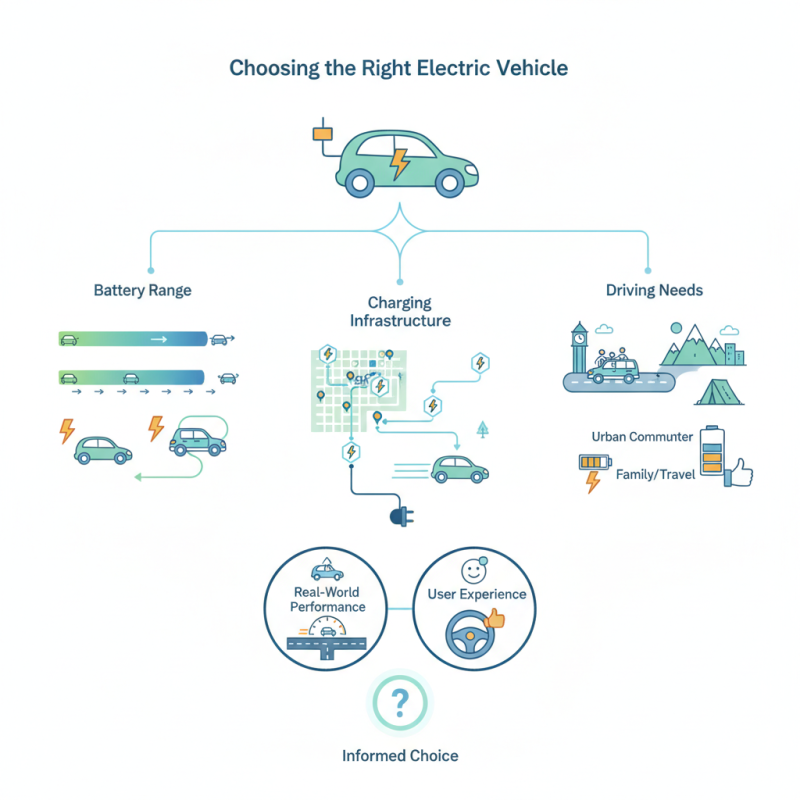
Choosing the right Electric Vehicle can be daunting. There are various factors to consider, including battery range, charging infrastructure, and your specific driving needs. For instance, urban commuters might prioritize compact models with quick recharge options. Families may seek spacious designs that accommodate multiple passengers. Additionally, the average EV range has increased significantly, exceeding 300 miles for many models, yet this varies widely across different brands.
Understanding the nuances between models can lead to informed choices. As the market evolves, so does consumer awareness of what is essential. With numerous options available, the decision should align with individual requirements and environmental considerations. Relying solely on specifications can be misleading; real-world performance and user experiences are invaluable in this process.
Understanding Your Driving Habits and Needs
Understanding your driving habits is crucial when selecting an electric vehicle (EV). According to a 2021 report by the International Energy Agency, more than 70% of EV owners charge their vehicles at home. This highlights the importance of daily commuting distance. If your commute is short, a smaller battery size may suffice.
Consider your regular routines. Are you frequently on long trips or mostly driving short distances? Many EVs have ranges between 150 to 370 miles. Now, think about charging infrastructure in your area. Are there enough public charging stations? This can impact your decision significantly.
Tip: Calculate your daily mileage. If it’s under 40 miles, a compact EV might be right for you.
Additionally, analyze your lifestyle. Do you require additional cargo space or seating? Families may need larger models or SUVs. Research indicates that larger EVs generally have bigger battery packs, thus affecting their price.
Tip: Visit local EV dealerships for test drives. It’s essential to feel the vehicle’s comfort and features firsthand.
Don't overlook your budget. Electric vehicles can be pricier upfront. However, lower running costs and incentives can make them affordable over time. Always weigh initial costs against long-term savings. Embrace the learning curve associated with transitioning into electric mobility. The right choice hinges on a perfect blend of understanding your needs and what the market offers.
Evaluating Electric Vehicle Types and Models
When evaluating electric vehicle (EV) types and models, it's essential to understand your specific needs. The market offers various categories, including battery electric vehicles (BEVs) and plug-in hybrid electric vehicles (PHEVs). BEVs are fully electric, with ranges typically between 150 to 370 miles. PHEVs, on the other hand, combine a conventional engine with an electric motor, providing flexibility for longer trips.
A recent report by the International Energy Agency highlights that global EV sales soared to 6.6 million units in 2021, a clear indication of consumer interest. This growth presents both opportunities and challenges. Consumers must consider charging infrastructure and battery life. Common issues like range anxiety still exist. Many users express concerns about finding adequate charging stations during long journeys.
Different models cater to various preferences. For example, compact cars offer agility, while SUVs provide more space and power. Some users may prioritize sustainability, while others might focus on performance. Limited availability of certain models can make purchasing decisions complex. Research and test-driving several options can enhance your understanding of what fits your lifestyle best.
Assessing Key Features and Specifications of EVs
When choosing an electric vehicle (EV), consider key features that align with your lifestyle. Range is critical; evaluate how far you'll drive daily. Most EVs can handle typical commutes, but longer trips require careful planning. Check the battery capacity, as it directly impacts range.
Efficiency matters too. An EV's energy consumption affects operational costs. Look for kilowatt-hours (kWh) per 100 miles. A lower figure indicates better efficiency. Fast charging options add convenience for road trips but can vary widely between models.
**Tips:** Always test drive different models. Feel the handling and comfort. Pay attention to cabin technology and space. Don’t rush the decision. Researching charging stations in your area is wise before purchasing. Evaluate your level of driving, and how much charging can fit into your routine. Keep energy prices in mind, as they fluctuate. These factors collectively impact your EV ownership experience.
How to Choose the Right Electric Vehicle for Your Needs?
| Model | Range (miles) | Charging Time (0-100%) | Battery Capacity (kWh) | Seating Capacity | Price ($) |
| Compact EV | 250 | 6 hours | 50 | 5 | 30,000 |
| Sedan EV | 350 | 8 hours | 75 | 5 | 45,000 |
| SUV EV | 300 | 7 hours | 65 | 5-7 | 50,000 |
| Luxury EV | 400 | 12 hours | 100 | 5 | 80,000 |
| Pickup EV | 320 | 10 hours | 85 | 5-6 | 55,000 |
Considering Budget and Incentives for Electric Vehicles
Choosing the right electric vehicle (EV) involves careful consideration of your budget and available incentives. With EV adoption on the rise, government incentives can significantly reduce initial costs. According to a report from the International Energy Agency, many countries offer tax credits and rebates. In the U.S., for example, buyers can receive up to $7,500 in federal tax credits.
Check your local and state incentives. Some places provide additional benefits, like reduced registration fees or discounts on charging. Understanding these incentives can make a substantial difference in your decision-making process. A 2022 study indicated that regions with strong EV incentives saw a 40% increase in adoption rates.
Tips: Determine your budget before shopping. Include potential savings from incentives. Consider the total cost of ownership, factoring in maintenance and fuel savings.
When evaluating an EV, think about your driving habits. Daily commutes and long trips demand different ranges and features. Remember, while upfront costs might seem high, long-term savings on fuel and maintenance can balance expenses. Explore charging infrastructure in your area; it influences convenience and car choice.
Electric Vehicle Options Based on Budget and Incentives
Exploring Charging Options and Infrastructure Availability
When choosing an electric vehicle (EV), charging options are crucial. Many potential buyers overlook this aspect. Charging infrastructure varies greatly by location. In urban areas, public fast chargers might be readily available. In rural settings, availability can be sparse. Understanding local charging stations is vital before making a purchase.
Home charging is another important factor. Installing a Level 2 charger can make daily use more convenient. Yet, not everyone has access to a suitable home setup. Some must rely on public charging, which can be a hassle. Charging speed and accessibility can significantly impact your experience.
Additionally, consider the type of charging networks in your area. Not all networks are created equal. Some offer better reliability and customer service than others. Researching these can save you frustration. It’s essential to reflect on how often you’ll need to charge and where. This insight will guide your EV choice and help ensure it fits your lifestyle.