
How to Start a Power Bank Rental Business?
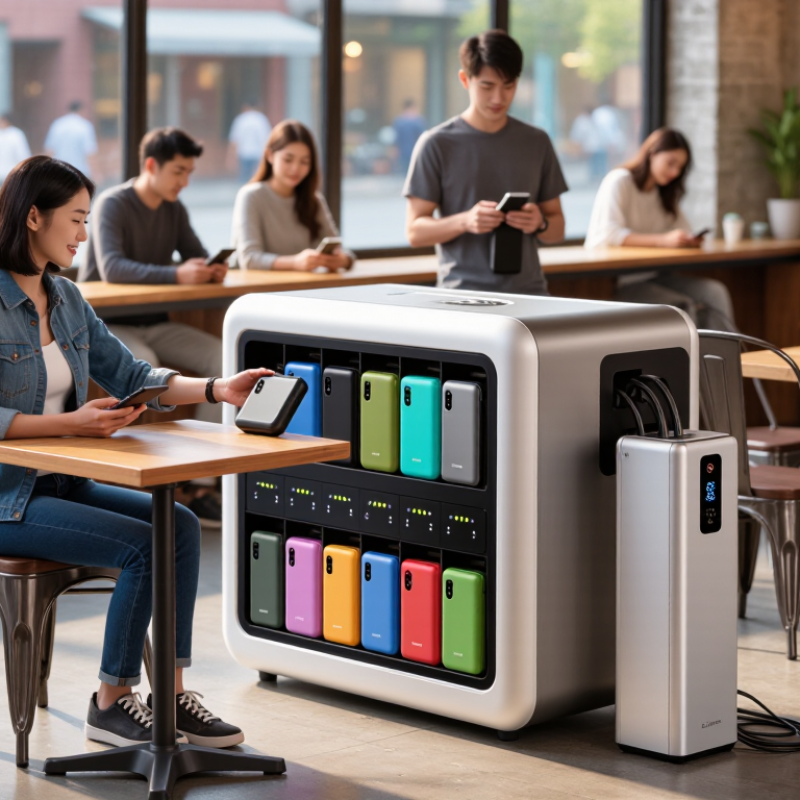
A Power Bank Rental Business can look simple from the customer’s side: scan a code, take a charged battery, and return it later. Behind that quick exchange sits a practical operation. You need reliable charging stations, enough battery inventory, clear pricing, and a plan for maintenance. A dead unit at a busy café is a small failure, but customers remember it.
Startup expert Eric Ries offers a useful lens: “A startup is a human institution designed to create a new product or service under conditions of extreme uncertainty.” That uncertainty is easy to see here. Will people rent near transit stops, food courts, or event venues? Will they return batteries on time? The answers depend on location and behavior, not just a polished app. Test a few sites before committing to a large network.
Small details matter. Track rentals per station, battery returns, charging downtime, and customer complaints. Speak with venue owners about placement, access, and revenue arrangements. Check local business, consumer, and data-protection requirements with qualified advisers before launch; requirements vary by location. A spreadsheet can reveal patterns, though it cannot explain every customer choice. Some plans will be wrong. That is normal, but ignoring weak results is not. This guide explores how to assess demand, select equipment, set up operations, price rentals, and grow carefully. The goal is not a perfect launch. It is a service people can trust when their phone battery reaches five percent.
Validate Demand Against 1.17 Billion Smartphones Shipped in 2023 (IDC)
IDC’s Worldwide Quarterly Mobile Phone Tracker reported 1.17 billion smartphone shipments worldwide in 2023, down 3.2% from 2022. That is a large device flow, not a customer count. Shipments include replacements and phones used far from your planned service area. Treat the figure as a reason to investigate, not a revenue forecast. GSMA’s State of Mobile Internet Connectivity Report 2024 estimated that 4.6 billion people used mobile internet in 2023. Connected phones are central to daily life, but that does not prove people need a rental power bank at a particular venue.
Validate locally before buying a fleet. Map transit stops, campuses, food courts, and event venues; note dwell times, outlet access, and peak hours. Run a small pilot and track rentals per device, repeat use, failed scans, return delays, and battery swaps. Ask visitors why they rented—or walked past. Compare revenue after site fees, payment costs, maintenance, and device losses with your equipment costs. A busy venue can still underperform when visitors stay briefly or outlets are plentiful. The first site may disappoint. That is useful evidence, not a verdict on every location.

Choose Venues Using Local Footfall, Dwell Time, and Charging Demand
A power bank rental business depends on placing stations where people need a charge and have time to use one. Start by observing candidate venues at different hours. Count passing visitors, but also note how many stop, wait, or stay for at least twenty minutes. A busy entrance can look promising while people move through too quickly to notice a station. Look for practical clues: phone use in queues, sparse wall outlets, and visitors carrying devices during long waits.
Tips: Compare weekday and weekend traffic. Ask venue managers about peak periods, and record counts yourself. Check whether a station would be visible near seating, food counters, or waiting areas without blocking movement.
Footfall, dwell time, and charging demand work best as a combined picture. A transport waiting area may have brief visits but urgent battery needs; a café may have fewer visitors who stay longer. Estimate demand cautiously, then test a small number of locations before expanding. My first shortlist may still be wrong: observed behavior does not guarantee rentals. Review usage and restock or relocate stations when the evidence changes. Keep simple notes on time, visitor flow, and charging-related questions.
Model Fleet Costs and Revenue with Realistic Utilization and Battery-Life Assumptions
A power bank rental forecast should start with the usable fleet, not the number of units purchased. If you buy 500 banks, some may be charging, damaged, or unavailable at any moment. Model active inventory separately, then estimate rentals per available bank each day. For example, 1.2 rentals daily at an average fee of $3.50 produces about $4.20 in gross daily revenue per active bank. That is not take-home income. Subtract site commissions, payment fees, connectivity, collection visits, repairs, and losses. Not every day.
Test low, expected, and high utilization cases. A busy transit location may perform differently from a quiet café, and rainy weeks or holidays can shift demand. Include station-level variation rather than assigning every location the same rental rate. A small pilot can replace guesses with observed returns, peak hours, and average rental duration. Battery life needs its own assumption: frequent cycling, heat, and poor charging habits may shorten useful service. Set aside a replacement reserve based on expected cycles, but revisit it when inspection data arrives. A spreadsheet can look precise while hiding weak assumptions. I would avoid treating the first month as a stable baseline.
| Category | Metric | Assumption or Result | Calculation and Notes |
|---|---|---|---|
| Operating Assumptions | |||
| Fleet | Rental locations | 50 | Illustrative launch fleet; results depend on location quality and local demand. |
| Fleet | Docks per location | 6 | 300 dock positions across the fleet. |
| Fleet | Power banks deployed | 300 | Six banks per location; 30 additional units are budgeted as initial spares. |
| Utilization | Base rentals per location per day | 1.8 | Equivalent to 90 rentals per day across 50 locations, or about 0.30 rentals per deployed bank per day. |
| Pricing | Average collected fee per rental | $2.25 | Blended rental revenue assumption; taxes, deposits, and late fees are excluded. |
| Commercial terms | Venue revenue share | 20% of rental revenue | Actual agreements vary by location and may use different fee structures. |
| Payments | Processing cost | 3% of rental revenue | Illustrative blended payment-processing assumption. |
| Battery life | Planning replacement life | 30 months | Calendar-life planning assumption; actual life depends on usage, storage, temperature, and charging practices. |
| Battery life | Cycle-life reference | Approximately 500 equivalent full cycles | Use supplier specifications and field data to refine the replacement schedule; calendar aging may require replacement before the cycle limit. |
| Initial Fleet and Launch Costs | |||
| Equipment | Charging stations | $11,000 | 50 stations × $220 per station. |
| Equipment | Deployed power banks | $4,800 | 300 banks × $16 per bank. |
| Launch | Installation and site setup | $1,750 | 50 locations × $35 per location. |
| Launch | Software onboarding and configuration | $1,200 | Illustrative one-time setup allowance. |
| Inventory | Initial spare banks | $480 | 30 spare banks × $16 per bank. |
| Estimated initial investment | $19,230 | Excludes taxes, financing, working capital, and any landlord deposits. | |
| Base-Case Monthly Revenue and Operating Costs | |||
| Revenue | Monthly rental transactions | 2,700 | 50 locations × 1.8 rentals per day × 30 days. |
| Revenue | Gross rental revenue | $6,075 | 2,700 rentals × $2.25 per rental. |
| Variable cost | Venue revenue share | $1,215 | 20% × $6,075 gross rental revenue. |
| Variable cost | Payment processing | $182 | 3% × $6,075 gross rental revenue; rounded to the nearest dollar. |
| Operating cost | Software and fleet platform | $300 | Illustrative monthly fleet-level allowance. |
| Operating cost | Connectivity | $100 | Illustrative monthly allowance for connected equipment. |
| Operating cost | Field service and routine maintenance | $350 | Allowance for site checks, cleaning, and routine repairs. |
| Operating cost | Operations labor | $1,200 | Illustrative monthly allowance; staffing needs depend on service coverage and growth. |
| Reserve | Battery replacement reserve | $160 | 300 deployed banks × $16 ÷ 30-month planned life. |
| Reserve | Lost or unrecovered bank reserve | $48 | Assumes monthly loss of 1% of the 300 deployed banks, replaced at $16 each. |
| Total modeled monthly operating costs | $3,555 | Includes venue share, payment fees, operating costs, and replacement reserves. | |
| Monthly operating contribution before tax and financing | $2,520 | Gross rental revenue less modeled monthly operating costs; excludes depreciation and owner distributions. | |
| Payback | Simple initial-investment payback | About 7.6 months | $19,230 initial investment ÷ approximately $2,520 monthly operating contribution; assumes the base case is reached immediately. |
| Utilization Sensitivity | |||
| Lower utilization | 1.0 rental per location per day | About $441 monthly contribution | 1,500 rentals and $3,375 revenue per month; includes the same fixed-cost assumptions and the modeled variable venue and payment fees. |
| Base utilization | 1.8 rentals per location per day | About $2,520 monthly contribution | 2,700 rentals and $6,075 revenue per month. |
| Higher utilization | 2.6 rentals per location per day | About $4,599 monthly contribution | 3,900 rentals and $8,775 revenue per month; assumes existing fleet capacity can support the added demand. |
Meet UN 38.3 Battery-Transport Tests and Local Safety Requirements
How to Start a Power Bank Rental Business?
Meet UN 38.3 Battery-Transport Tests and Local Safety Requirements
Power banks contain lithium batteries, so transport planning belongs in your launch checklist. Ask suppliers for the UN 38.3 test summary for the exact battery type you plan to use. Check that its model details match your inventory, not just a similar-looking unit. Keep the records accessible to your shipping provider. Packaging, labels, and paperwork can vary with shipment size and transport method. Confirm current requirements before dispatch.
A test summary is not a complete safety plan. Not enough. Local rules may cover where batteries are stored, how charging stations are installed, and what fire precautions a site needs. Contact the local fire authority and building or electrical inspector before choosing a kiosk location. Ask about charging areas, exit access, and required separation from heat sources. Keep written notes; verbal guidance is easy to forget.
Inspect devices for cracked cases, swelling, unusual heat, or damaged cables, and remove suspect units from service. Set a routine for recording inspections and reporting incidents. A common planning mistake is treating compliance as a one-time task. Requirements can differ across cities and change over time, so review them when your locations or shipping routes change. If an answer is unclear, get advice from a qualified transport or safety professional before operating.
Pilot Operations and Scale for a Market with 5.6 Billion Mobile Subscribers by 2030 (GSMA)
A power bank rental business can serve commuters, travelers, and event visitors who need a quick charge away from home. GSMA’s Mobile Economy 2024 report projects 5.6 billion unique mobile subscribers by 2030. That is a large potential audience, not proof of local demand. Start with a small pilot near transit stops, campuses, or busy cafés. Track rentals by hour, repeat use, battery returns, and charging-station downtime. A simple spreadsheet can reveal more than an impressive launch.
Keep the first operation manageable. Place a few stations in locations where people already pause, and ask site partners about foot traffic and power access. Set clear prices and return instructions. Check battery condition daily; a damaged unit can undermine trust fast. ITU’s Facts and Figures 2023 estimates that 5.4 billion people used the internet, reinforcing the scale of connected users. Still, subscriber growth does not guarantee that customers will rent. Test willingness to pay before expanding. My own caution: location estimates are often optimistic, and a quiet weekday can change the math.
Tips: Pilot for four to eight weeks. Compare rentals per station, repeat customers, and maintenance costs. Expand only where the numbers hold up. Keep a reserve of charged units; small stockouts can frustrate customers.

