Ultimate Tips for Choosing a Solar Powered Generator?
Choosing the right Solar Powered Generator can significantly impact your outdoor adventures and emergency preparedness. With technology evolving rapidly, options can be overwhelming. A solar powered generator harnesses the sun’s energy, providing a clean, renewable power source.
When picking the ideal model, consider your power needs. Do you require energy for small devices or larger appliances? It’s easy to underestimate your requirements, leading to frustration. Besides power capacity, portability is crucial. Many generators are lightweight and easy to carry, but some are cumbersome. You might regret a choice that doesn’t align with your lifestyle.
Battery life and charging time also matter. It’s frustrating when a generator runs out of power too quickly. Be wary of specifications; they can sometimes be misleading. Look for real user reviews to get a clearer picture. This decision might feel overwhelming, but with careful consideration, you can find a solar powered generator that truly fits your needs.
Key Factors to Consider When Choosing a Solar Powered Generator
When selecting a solar powered generator, key factors significantly influence your decision-making. One important aspect is the generator's power output, measured in watts. Generators generally range from 300 watts to over 3000 watts. A typical household appliance might require 1000 watts, so assess your needs carefully. Consider whether you need to power small devices or entire systems.
Another vital factor is battery capacity. Measured in amp-hours (Ah), battery capacity determines how long your generator can run without sunlight. For instance, a 100Ah battery can power a 200-watt device for about 5 hours. Industry data suggests that users should look for a generator with at least 300-800 watt-hours if they want to run essential appliances.
Portability is also crucial. Some models are lightweight and easy to transport, while others may be bulkier. This affects how you will use the generator—camping, emergency backup, or off-grid living. Evaluating weight, size, and ease of transport is essential. Lastly, the inverter type matters too. Pure sine wave inverters work best for sensitive electronics, while modified sine wave models are adequate for simpler devices. Balancing these considerations will guide you to the right choice.
Ultimate Tips for Choosing a Solar Powered Generator
The following chart illustrates the key factors to consider when choosing a solar powered generator, based on user preferences and priorities. Each factor is represented as a percentage of importance:
Understanding Different Types of Solar Powered Generators Available
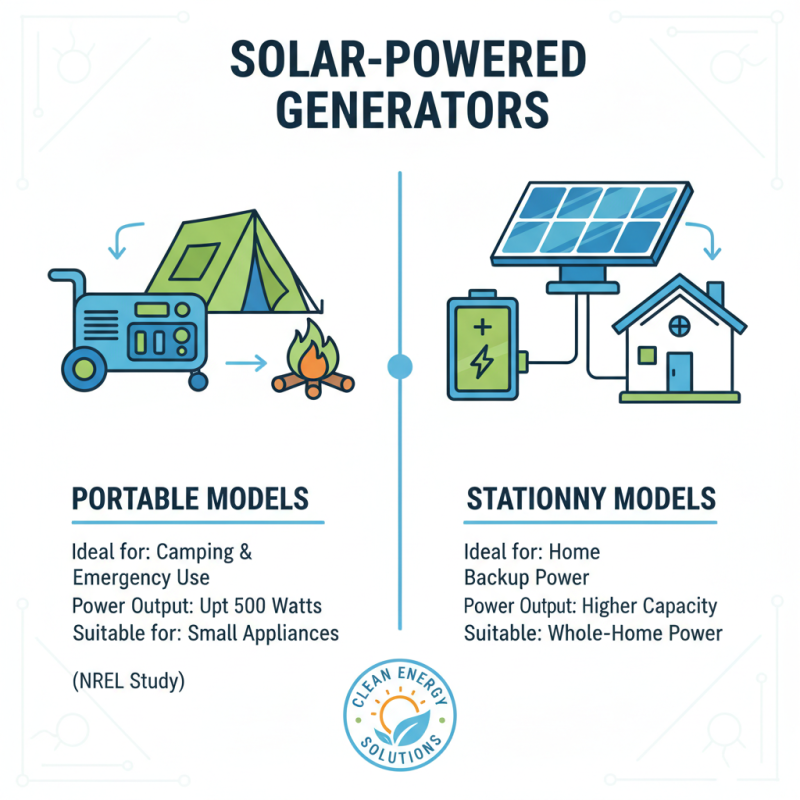
When exploring solar powered generators, it's crucial to understand the various types available. These generators can be broadly classified into portable and stationary models. Portable units are ideal for camping or emergency use, while stationary systems are more suited for home backup power. According to a recent study by the National Renewable Energy Laboratory (NREL), portable solar generators can provide up to 500 watts of power, which is sufficient for running small appliances.
Another type is the hybrid solar generator, which combines solar power with traditional fuels. This flexibility allows users to rely on solar energy when it's available and switch to gasoline or propane during low sunlight. Research from the International Energy Agency (IEA) highlights that hybrid systems can increase efficiency by 30% in variable weather conditions. However, users need to consider the implications of fuel consumption and emissions.
The capacity of solar generators varies significantly. Some units offer battery storage of 100Ah or more, while others may be limited to just a few. Such variability can impact long-term use. Users should evaluate their specific needs, such as the devices they want to power. This evaluation ensures the right balance between portability and energy capacity, yet it often requires careful planning. Many people overlook this, leading to unexpected shortfalls in power supply.
Evaluating Battery Capacity and Power Output for Your Needs
When choosing a solar-powered generator, evaluating battery capacity is crucial. The battery capacity determines how long your generator will run. Look for specifications that indicate watt-hours (Wh). This number tells you how much energy the battery can store. If you plan to power multiple devices, you’ll need a larger capacity. However, larger batteries can also mean heavier generators. Balance portability with power needs.
Power output is equally important. Consider the peak and continuous wattage ratings. The peak output shows the maximum power available for a short time. This is essential for starting devices like refrigerators. Continuous wattage indicates how much power the generator provides over a longer period. If it’s too low, your devices may not function properly. Think about the devices you want to power and their usage patterns.
Many people overlook their specific energy needs when buying. Some might assume a smaller generator is sufficient. However, this can lead to frustration during use. It’s important to consider not only current needs but future ones too. For example, if you plan to add devices later, choose a generator with extra capacity. Reflecting on what you truly need ensures a more satisfying purchase.
Exploring Portability and Design Features in Solar Generators
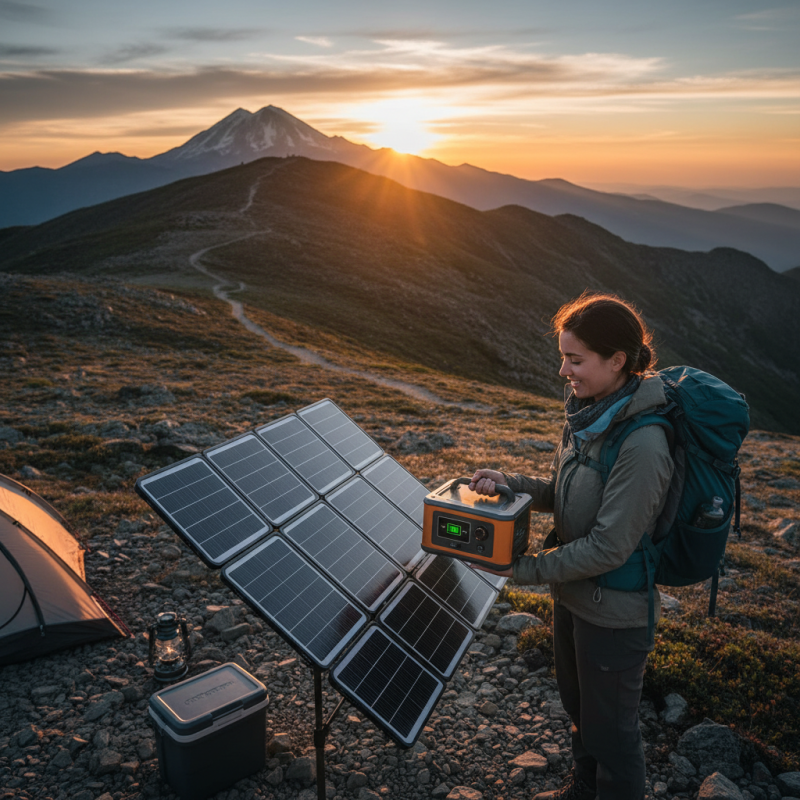
When choosing a solar powered generator, portability is key. A lightweight design can make a significant difference. Look for models that weigh less than 50 pounds. They should have convenient handles for easy transport. Some even come with wheels for smoother movement across various terrains. Compact sizes are often more manageable, fitting easily in a car or backpack.
Design features also play a crucial role. Choose a generator with a clear battery charge indicator. This small detail can save time and hassle. An inverter with multiple outlets can offer flexibility. Consider a model with USB ports for charging smaller devices quickly. While it’s tempting to go for the most features, ensure it meets your specific needs. Too many functions can lead to confusion and potential malfunctions.
Examine the overall build quality as well. A robust casing will protect against wear and tear. However, overly bulky designs can be cumbersome. Look for a balance between durability and usability. Reflecting on your choice, consider how often you will use the generator. If your needs are infrequent, it might not be worth the investment in a high-end model.
Ultimate Tips for Choosing a Solar Powered Generator
| Feature |
Importance Level |
User Preference |
Recommendation |
| Portability |
High |
Compact and lightweight design |
Choose models under 50 lbs |
| Battery Capacity |
Very High |
Ability to power multiple devices |
Look for at least 200Wh capacity |
| Charging Options |
Moderate |
Solar, AC, and DC charging |
Choose models with multiple input options |
| Durability |
High |
Ready for outdoor conditions |
Look for weather-resistant models |
| Noise Level |
Low |
Silent operation preferred |
Opt for inverter generators for quiet use |
| Design Features |
Moderate |
Ease of use and aesthetics |
Choose simple and intuitive interfaces |
Assessing Cost vs. Long-term Savings of Solar Energy Solutions
When considering solar-powered generators, it’s crucial to evaluate both immediate costs and long-term savings. Reports from the National Renewable Energy Laboratory (NREL) indicate that the average installation cost of solar systems has dropped nearly 70% since 2010. Despite the initial investment, solar energy can save homeowners approximately $20,000 over 20 years. These figures are compelling, but they do raise questions about the upfront costs involved.
Many see high initial price tags as a barrier. Investing in a solar generator might seem daunting, especially with prices ranging from $500 to over $3,000. However, incentives and tax credits can significantly offset these expenses. In 2023, the federal solar tax credit allows homeowners to reduce costs by up to 30% on eligible systems. Still, the savings depend heavily on local electricity rates and usage.
It’s crucial to reflect on the long-term impact of energy choices. Solar generators typically last around 25 years, ensuring consistent savings with a lower carbon footprint. However, not all environments are optimal for solar energy. Shadow from trees or nearby buildings can reduce efficiency. Therefore, assessing your unique situation is vital for maximizing benefits. Choosing wisely requires careful consideration of both costs and potential long-term gains.