What Are the Top Mini Circuit Breaker Manufacturers in China?
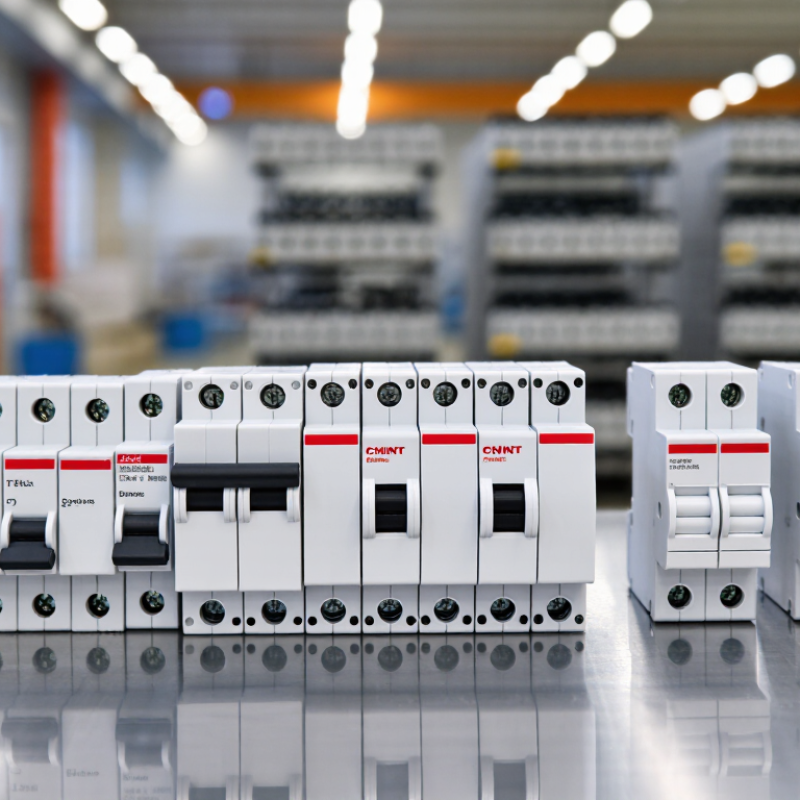
China’s Mini Circuit Breaker industry includes several influential manufacturers, but identifying the best supplier requires more than comparing brand names. CHINT, Delixi Electric, TENGEN, Changshu Switchgear, and Shanghai People’s Electrical Appliance Group often appear in professional procurement discussions. Their products serve residential panels, commercial buildings, solar installations, and industrial control cabinets.
Nan Cunhui, founder of CHINT Group, has often emphasized, “Quality is the life of an enterprise.” This principle matters when evaluating a Mini Circuit Breaker. A reliable unit should trip consistently during overloads and short circuits. Its terminal screws should hold firmly. Its casing should resist heat and flame. Small details matter.
This guide examines leading Chinese manufacturers through practical criteria. These include IEC compliance, rated breaking capacity, production consistency, product certification, and technical support. It also considers factory experience and export performance. A 6 kA breaker may suit many residential applications, while demanding projects may require 10 kA protection. The correct choice depends on the installation, not marketing language.
Brand rankings are never permanent. Market data changes. Product quality may vary between series, factories, and distribution channels. That deserves attention. A famous manufacturer can still provide an unsuitable model. Conversely, a less familiar supplier may offer strong engineering and responsive service.
The following overview aims to help importers, contractors, and electrical engineers compare China’s top Mini Circuit Breaker manufacturers with greater confidence. It focuses on evidence, not exaggerated claims. Check the datasheet carefully. Then verify the actual product.
MCB Scope: IEC 60898-1, 1–63 A Ratings, and 6–10 kA Breaking Capacity
When comparing mini circuit breaker manufacturers in China, buyers should start with the MCB scope, not the product photograph. IEC 60898-1 is the key reference for household and similar low-voltage applications. It covers important performance requirements, testing methods, and operating conditions.
A practical range is 1–63 A, suitable for lighting circuits, sockets, control panels, and small commercial equipment. Manufacturers should provide clear ratings for each current level. Thermal protection responds to overloads, while magnetic protection reacts to short circuits. The tripping curve also matters. B, C, and D curves suit different starting currents and load characteristics. A catalog rating alone is not enough.
Breaking capacity usually falls between 6 and 10 kA in this MCB category. This figure indicates the fault current the device can interrupt safely under specified conditions. Buyers should check test reports, calibration records, terminal temperature-rise data, and consistency between samples. Production experience matters here. A reliable factory should control contact materials, spring pressure, enclosure strength, and assembly torque.
I would also request samples from different production batches. One sample can look excellent. Ten may reveal variation. Some suppliers explain IEC compliance clearly but provide limited evidence for the exact 63 A or 10 kA configuration. That gap deserves attention. Installation environment, supply voltage, ambient temperature, and prospective short-circuit current must be verified before selection.
Miniature Circuit Breaker Scope Under IEC 60898-1
Standard preferred rated-current values from 1–63 A are grouped by current range, with the referenced 6–10 kA short-circuit breaking-capacity scope shown for comparison.
The IEC 60898-1 preferred current sequence includes 1, 2, 3, 4, 6, 10, 13, 16, 20, 25, 32, 40, 50, and 63 A. This chart groups those ratings into three practical ranges and highlights the 6 kA and 10 kA breaking-capacity limits used in this scope.
CHINT: 1–63 A MCB Ranges, B/C/D Curves, and IEC 60898-1 Compliance
When comparing mini circuit breaker manufacturers in China, engineers should examine usable specifications, not only catalog claims. A dependable manufacturer may offer MCBs from 1 A to 63 A for residential, commercial, and light industrial panels. This range supports small lighting circuits, socket outlets, and compact machinery.
B, C, and D tripping curves provide different protection responses. B-curve breakers usually suit lighting and resistive loads with limited inrush. C-curve models handle moderate starting currents from pumps, fans, and small motors. D-curve devices tolerate higher inrush, but they require careful fault-current verification. Incorrect curve selection can cause nuisance trips or weak protection.
IEC 60898-1 compliance is an important reference for low-voltage household and similar MCB applications. However, a printed standard number is not enough. Buyers should request test documentation, rated short-circuit capacity, terminal details, and temperature performance. In field installations, clear markings and consistent torque handling often matter more than appearance. Small details matter.
I have seen otherwise suitable breakers fail during evaluation because cable sizes, ambient temperature, or enclosure spacing were ignored. That is a useful warning. Performance depends on the complete installation, not the breaker alone. Independent laboratory evidence and traceable quality records strengthen confidence when selecting a Chinese supplier. Even then, product samples should be tested before large-scale purchasing.
Delixi Electric: 6–10 kA MCB Capacity, Pole Options, and Safety Certifications
When comparing Chinese mini circuit breaker manufacturers, breaking capacity deserves close attention. A reliable producer may offer 6–10 kA MCBs for residential, commercial, and light industrial panels. The rating indicates how much fault current the device can interrupt safely. It is not simply a larger number for marketing.
Field experience shows that pole selection affects installation flexibility. Common choices include 1P, 1P+N, 2P, 3P, and 4P models. Single-pole devices protect individual circuits, while multipole versions can disconnect several conductors together. A 1P+N unit can save space, but installers must confirm neutral switching requirements for the application. Small details matter.
Safety documentation should be examined before purchase. Look for testing aligned with IEC 60898-1, plus applicable CCC or CE documentation. Certificates should match the exact model, rated current, and breaking capacity. A factory with controlled production, traceable batches, and routine electrical testing offers stronger reliability. Ask for test reports.
The housing should feel firm.
Clear terminal markings reduce wiring mistakes. A visible trip position also helps technicians identify faults quickly. However, published specifications can appear more impressive than field performance. Ambient temperature, cable size, tightening torque, and enclosure conditions may reduce practical protection. I would not select an MCB from its kA rating alone. Verify the complete datasheet and installation environment.
People Electric: Comparing 1P–4P MCBs, Tripping Curves, and 6 kA Ratings
China has many established mini circuit breaker manufacturers, but quality varies between product lines. Reliable suppliers usually provide clear test reports, batch traceability, and production records. During practical panel work, I check terminal strength, label accuracy, and smooth handle movement. These details matter more than polished packaging.
People Electric’s MCB comparison should focus on 1P–4P protection, tripping curves, and a 6 kA breaking rating. A 1P device protects one live conductor, while 2P models usually disconnect live and neutral. Three-pole units suit three-phase circuits, and four-pole units can disconnect all relevant conductors. B curves trip around 3–5 times rated current. C curves usually trip around 5–10 times. D curves tolerate higher starting currents, often around 10–20 times. A 6 kA rating can suit many residential installations, but only when the prospective fault current stays below 6 kA. A higher rating may be necessary in stronger networks.
Tips: Match the curve to the load, not personal preference. Check the actual fault level. Confirm compliance with IEC 60898-1 and local installation rules. I would also compare heat-rise data and endurance testing. Some selection guides look complete, yet omit neutral switching details. That is a weakness worth questioning. Even experienced installers can overlook it. Test the complete assembly, not only the breaker.
What Are the Top Mini Circuit Breaker Manufacturers in China? - People Electric: Comparing 1P–4P MCBs, Tripping Curves, and 6 kA Ratings
| Comparison Dimension | 1P MCB | 2P MCB | 3P MCB | 4P MCB |
| Number of protected poles | 1 | 2 | 3 | 4 |
| Typical circuit use | Single-phase branch circuit | Single-phase circuit with neutral isolation | Three-phase circuit | Three-phase circuit with neutral isolation |
| Common rated current range | 1–63 A | 1–63 A | 1–63 A | 1–63 A |
| Typical operating voltage | 230/400 V AC | 230/400 V AC | 400 V AC | 400 V AC |
| Rated short-circuit capacity | 6 kA | 6 kA | 6 kA | 6 kA |
| B-curve magnetic trip range | 3–5 × In | 3–5 × In | 3–5 × In | 3–5 × In |
| C-curve magnetic trip range | 5–10 × In | 5–10 × In | 5–10 × In | 5–10 × In |
| D-curve magnetic trip range | 10–20 × In | 10–20 × In | 10–20 × In | 10–20 × In |
| Typical application | Lighting and socket circuits | Water heaters and dedicated loads | Motors and three-phase equipment | Main three-phase distribution circuits |
| Typical module width | Approximately 18 mm | Approximately 36 mm | Approximately 54 mm | Approximately 72 mm |
| Common installation method | 35 mm DIN rail | 35 mm DIN rail | 35 mm DIN rail | 35 mm DIN rail |
| Applicable product standard | IEC 60898-1, where applicable | IEC 60898-1, where applicable | IEC 60898-1, where applicable | IEC 60898-1, where applicable |
| Technical note: In denotes the rated current. A 6 kA rating is the rated short-circuit capacity under the conditions specified by the applicable standard; final selection should also consider system voltage, prospective fault current, ambient temperature, conductor size, coordination, and the manufacturer’s certification data. |
How to Rank China’s MCB Manufacturers by Certification, Capacity, and Export Reach
What Are the Top Mini Circuit Breaker Manufacturers in China?
Ranking China’s MCB manufacturers requires more than comparing prices or catalog pages. Certification should come first. Verify compliance with IEC 60898-1, the main standard for household and similar circuit breakers. For domestic sales, check China Compulsory Certification records. ISO 9001 certification also matters, but it does not prove product performance alone. Independent laboratory reports, calibrated test equipment, and traceable batch records provide stronger evidence. The ISO Survey 2023 reported more than 1.26 million ISO 9001 certificates worldwide, so this certificate alone cannot separate leading factories from average suppliers.
Capacity needs practical proof. Ask for verified monthly output, automated assembly lines, thermal and short-circuit testing, and current production lead times. A supplier claiming millions of units should show production records, not only photographs. Inspectors can compare line speed with worker numbers and warehouse movement. China Customs and UN Comtrade data under HS 853620 help assess export activity. Review shipment frequency, destination diversity, and repeat orders rather than one large transaction. Export reach also reflects packaging control, documentation accuracy, and after-sales support.
Tips: Request three recent test reports and one factory audit. Check whether the issuing laboratory is accredited. Do not rank capacity by floor size. A large factory can still deliver inconsistent batches. The ranking is never perfect; even experienced buyers may overweight certificates and overlook field failure data. Also examine warranty claims, recall procedures, and customer references from similar voltage markets.