What Are the Top Types of DC Chargers for Buyers?
Buyers comparing DC Chargers should look beyond peak kilowatts. The right system depends on vehicle compatibility, site capacity, charging patterns, and the time drivers can actually spend plugged in. A highway stop may call for high-power charging and several dispensers. A fleet depot may benefit more from dependable overnight scheduling and carefully managed power sharing. Small details matter: cable reach, connector handling, screen visibility in bright sun, and how clearly the charger reports a fault.
Common options include standalone fast chargers, modular power-cabinet systems, split or satellite dispensers, and lower-power DC units for workplaces or fleets. Each design balances output, footprint, expansion, and maintenance differently. A larger rating does not guarantee faster sessions; the vehicle’s charging curve and battery temperature also shape real-world speed. That distinction is easy to overlook.
EV charging analyst Tom Moloughney has discussed practical charging performance in his reporting, but I cannot verify a direct quotation from him on this specific topic. Rather than invent a quote, buyers should treat any quoted claim as something to check against a reliable source. Compare sustained output, not just headline power. Ask how the system behaves when several vehicles charge at once, and what service support is available after installation. A careful shortlist starts with the site’s actual use case, then tests claims against published specifications and real operating conditions. There is no perfect charger for every buyer.
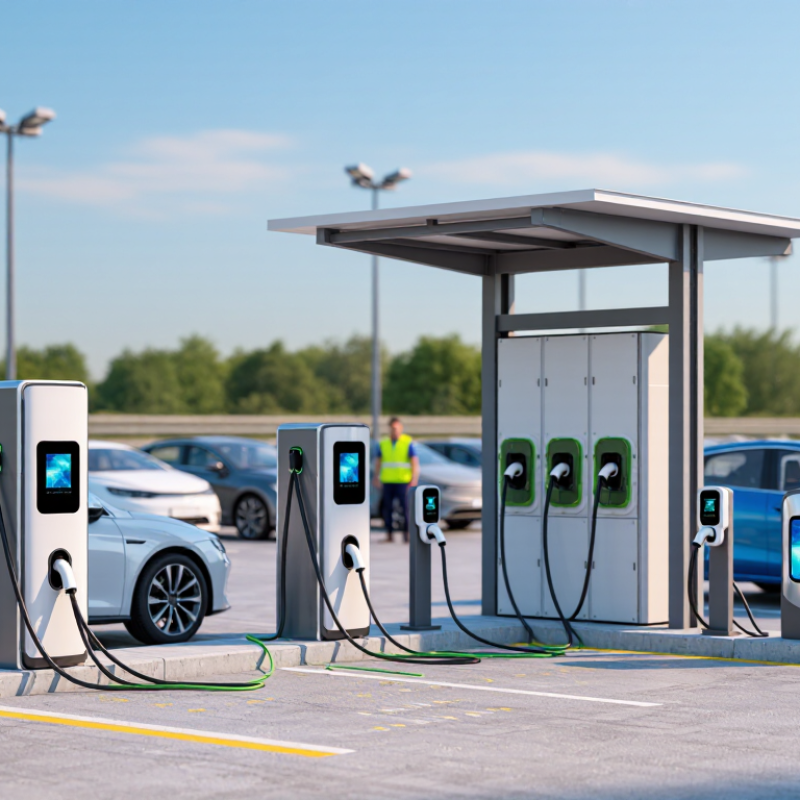
How DC Chargers Deliver Power Directly to an EV Battery
What Are the Top Types of DC Chargers for Buyers?
How DC Chargers Deliver Power Directly to an EV Battery
DC chargers include standard fast chargers, high-power units, and modular systems. Their key difference is output capacity, not simply charging speed. Unlike home AC charging, DC equipment converts electricity outside the vehicle. It then sends controlled direct current straight to the battery pack. The vehicle’s onboard AC charger is largely bypassed.
The process depends on constant communication. The charger checks battery voltage, temperature, state of charge, and safety limits. The battery management system requests an appropriate current level. Charging may begin strongly, then slow near a high state of charge. This taper protects battery cells and reduces heat. Fast charging is not always faster in real conditions.
That detail matters.
Experienced technicians also inspect cable cooling, connector condition, and site power quality. A damaged connector can create resistance and unwanted heat. Poor ventilation may reduce charging performance. Buyers should compare peak power, charging curves, connector compatibility, warranty support, and installation requirements. A higher power rating sounds attractive, but the vehicle may accept less.
Tips: Check your vehicle’s maximum DC input before purchasing access. Keep the connector clean and dry. Avoid judging a charger only by its advertised peak speed. Weather, battery temperature, and grid capacity can change the result. The simple picture is useful, but real charging is less tidy.
Common DC Charger Types by Power Output and Charging Speed
What Are the Top Types of DC Chargers for Buyers?
Common DC Charger Types by Power Output and Charging Speed
DC chargers are commonly grouped by power output, and each group fits different driving patterns. Low-power units, usually 20–50 kW, suit workplaces, hotels, and longer parking periods. They can add useful range without demanding a large electrical connection. Charging may take one to several hours.
Mid-power chargers, around 60–150 kW, balance installation cost and charging speed. They work well for retail sites, fleets, and urban charging hubs. A compatible vehicle might gain 100 miles of range in 30–45 minutes. Actual results vary with battery size, temperature, and state of charge.
High-power chargers deliver 150–350 kW or more. They support highway travel and short stops, but only when the vehicle can accept that output. A charger cannot force a battery to charge faster. Higher power also requires stronger grid capacity, careful thermal control, and thicker cables. In real site assessments, these details often matter more than the headline speed. Faster is not always better.
Tips: Match charger power to the vehicle’s maximum DC input and typical parking time. Check the charging curve, not only the peak rating. Confirm connector compatibility, cable reach, maintenance access, and payment reliability. Leave room for demand growth. A small installation decision can become expensive to change later.
What Are the Top Types of DC Chargers for Buyers? - Common DC Charger Types by Power Output and Charging Speed
| DC Charger Type | Typical Power Output | Typical Use Case | Approximate Time to Add 200 Miles | Best Suited For | Key Buying Considerations |
| Low-Power DC Charger | 20–50 kW | Small commercial sites, workplaces, dealerships, and locations with longer dwell times | About 60–150 minutes | Urban drivers and vehicles that do not require rapid turnaround | Lower installation cost and grid demand, but slower charging and less suitable for highway rest stops |
| Standard Fast DC Charger | 50–100 kW | Retail parking, public parking areas, fleet depots, and community charging hubs | About 35–75 minutes | Daily drivers and mixed vehicle fleets | A practical balance between charging speed, equipment cost, and electrical infrastructure requirements |
| High-Power DC Fast Charger | 100–200 kW | High-traffic retail centers, urban charging plazas, and regional travel corridors | About 20–40 minutes | Most modern passenger EVs with compatible battery systems | Higher throughput, but site owners may need upgraded transformers, switchgear, and demand-management controls |
| Ultra-Fast DC Charger | 200–350 kW | Highway service areas, premium public charging locations, and busy fleet routes | About 12–25 minutes | Vehicles designed to accept high charging power | Fastest charging for compatible vehicles, although actual power is limited by the vehicle, battery temperature, and state of charge |
| Heavy-Duty DC Charging System | 350 kW and above | Electric buses, delivery fleets, trucks, logistics centers, and dedicated depot operations | Vehicle- and battery-dependent; designed for high-energy replenishment | Commercial fleets and vehicles with large battery packs | Requires substantial grid capacity, advanced thermal management, careful load planning, and higher capital investment |
Note: Charging times are general estimates for adding approximately 200 miles of range under favorable conditions. Actual results vary by battery capacity, vehicle charging limit, battery temperature, state of charge, charger utilization, and charging-curve behavior. DC fast charging commonly slows as the battery approaches a high state of charge.
How Charging Connectors Affect Vehicle Compatibility
Choosing the right DC charger starts with the connector, not the advertised charging speed.
A charger may deliver 150 kW, but your vehicle might accept only 50 kW. More importantly, the plug must match your vehicle’s inlet and charging protocol.
CCS1 is common in North America, while CCS2 appears widely across Europe and other regions.
CHAdeMO still supports many older vehicles, though its availability is declining in some markets.
NACS is becoming more common in North America. GB/T is widely used in China.
These connectors are not automatically interchangeable. An adapter may help, but it cannot always solve software, voltage, or communication limits.
Tips:
Check your vehicle manual before buying. Confirm the connector type, maximum DC input, voltage range, and charging curve.
Test the cable position too. A short cable may not reach an inlet placed near the rear wheel.
In real use, cold batteries, crowded sites, and damaged plugs can reduce charging performance.
I have found that buyers often focus on peak kilowatts and overlook connector access. That is an easy mistake. Compatibility is more than fitting the plug. True.
Key Features Buyers Should Compare Across DC Chargers
Choosing among DC charger types requires comparing operating features, not only advertised kilowatts. A compact 30–60 kW unit suits workplaces and small retail sites. High-power 150–350 kW equipment fits highway stops and busy fleets. Modular systems can allocate power between vehicles, although their controls may add complexity.
The International Energy Agency’s Global EV Outlook 2024 reports more than four million public charging points worldwide in 2023. Over 1.3 million were added that year. This growth makes uptime and serviceability increasingly important. Buyers should compare continuous output, connector compatibility, voltage range, cable length, and peak efficiency. Thermal management also matters. A charger may promise 350 kW, yet deliver less during heat, grid limits, or a nearly full battery. Peak numbers can mislead.
Check the installation details carefully. Measure available electrical capacity, ventilation needs, enclosure protection, and operating temperature. ISO 15118 support can improve vehicle communication and future payment functions, but compatibility should be verified in field testing. The charger should record energy use, faults, session duration, and remote diagnostics. The U.S. Department of Energy’s Alternative Fuels Data Center emphasizes charger availability and station status as practical considerations for drivers. Reliability is experienced at the cable, screen, and service desk.
Tips: Request independent efficiency and uptime records. Ask for maintenance response times. Test several vehicle types before purchase. Do not assume the newest feature creates the best return; sometimes simpler hardware serves a site better.
Matching a DC Charger Type to Your Site and Charging Needs
Choosing a DC charger starts with the site, not the maximum advertised power. Highway locations usually need 150–350 kW units, because drivers expect short stops. Urban parking areas may perform better with 50–150 kW chargers. Cars often stay longer there.
The International Energy Agency reported more than four million public charging points worldwide at the end of 2023. Fast chargers represented about 900,000 of them, growing by roughly 40% that year. These figures show strong demand, but they do not guarantee suitable utilization at every site. A rural station may need fewer high-power ports, while a busy city site may need several medium-power units. Traffic patterns matter more than impressive specifications.
Fleet depots require a different calculation. Modular DC systems can serve scheduled vehicles overnight or between shifts. Power sharing may reduce grid upgrades, although it can extend charging time during simultaneous demand. That trade-off is easy to underestimate. The U.S. Department of Energy notes that charging performance depends on vehicle capability, electrical capacity, temperature, and operating conditions. In practice, buyers should check transformer capacity, cable reach, payment access, maintenance response, and local permitting before selecting equipment. I would also leave expansion space. Early forecasts are often wrong. A charger that fits today’s vehicles may feel limited within a few years.