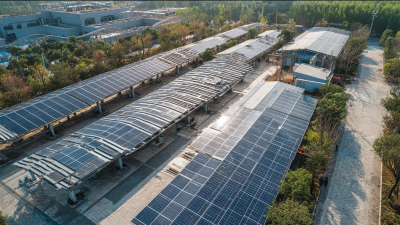
Why Choose Solar Power for Your Global Business?

Why Choose Solar Power for Your Global Business?

For many global companies, Solar Power is becoming a practical operating decision, not merely a sustainability statement. Warehouses, offices, factories, and retail sites can use rooftop panels to reduce exposure to changing electricity prices. A well-designed system may also support long-term energy planning across several markets. However, results depend on sunlight, roof strength, local tariffs, storage needs, and connection rules.

Real business experience shows that careful assessment matters more than impressive projections. A site survey should examine shading, roof condition, maintenance access, and future expansion plans. Finance teams should compare installation costs, financing terms, insurance, warranties, and expected energy savings. Operations managers should also plan for cloudy periods and equipment replacement. Sometimes, the best answer is not a full installation.

That point deserves attention. Solar power is not automatically cheaper everywhere. Its value can change sharply between regions. Reliable decisions require measured consumption data, realistic production estimates, and advice from qualified engineers. Guidance from recognized energy agencies can strengthen the analysis, while local professionals can confirm permitting and grid requirements. Companies should track performance after installation, rather than trusting the original forecast blindly.

The strongest global strategy may combine Solar Power with efficiency upgrades, battery storage, renewable electricity contracts, or a phased rollout. A pilot project can reveal maintenance challenges before expansion. It can also expose assumptions that looked convincing on paper. Done responsibly, solar energy can lower operational risk, improve environmental reporting, and demonstrate practical leadership. The opportunity is substantial, but credible planning must come before confident promises.

Why Choose Solar Power for Your Global Business?

The Basics of Solar Power for Global Businesses

Solar power converts sunlight into electricity through photovoltaic modules. These modules produce direct current, while an inverter changes it into usable alternating current. A commercial system may also include batteries, monitoring equipment, and grid connections.

The practical starting point is an energy audit. Review hourly electricity use, roof condition, available land, and local sunlight patterns.

A warehouse with strong afternoon demand may benefit from rooftop panels. A remote office might need batteries for evening operations.

System size should match the company’s load, not a simple square-meter estimate. Dust, heat, shading, and seasonal clouds can reduce output. Small details matter.

Global businesses must also examine permits, grid rules, insurance, maintenance skills, and currency risks. Qualified engineers should verify structural capacity and electrical safety in each location.

Production forecasts are useful, but they are not promises. I have seen plans look excellent until shade from a nearby structure changed the result.

Solar panels usually require limited maintenance, yet in dusty regions, cleaning schedules can affect performance. Batteries provide flexibility, but they add cost, replacement planning, and fire-safety requirements. The strongest projects use measured data, realistic financial assumptions, and regular performance checks. Mistakes still happen. Good planning makes them visible early.

How Solar Energy Supports International Operations

Solar energy can strengthen international operations by making power supply more predictable. Distribution centers, offices, and remote facilities often face different electricity prices and grid conditions. Rooftop panels can generate electricity during peak daylight hours, when cooling, computing, and production systems consume heavily. Batteries can store excess power for evening operations or short outages. That supports continuity across time zones.

Practical planning matters. A site survey should examine roof strength, shading, local weather, and future expansion plans. Energy data from each facility can reveal where solar capacity will have the greatest effect. The numbers can disappoint. A cloudy coastal site may produce less electricity than a dry inland location. Seasonal output can also complicate international budgeting. Reliable forecasts should use several years of local weather data, not one unusually sunny month.

Operations teams also need clear maintenance procedures. Inspections can identify damaged panels, loose connections, and battery temperature issues before they affect production. Remote monitoring helps managers compare output across countries and detect unusual losses. Local technicians should understand electrical safety rules and permitting requirements. Regulations differ widely. A design that works well in one location may require changes elsewhere. Solar power is not a universal fix, but it can reduce fuel dependence and improve long-term planning when engineers, finance teams, and local staff review the system together.

Key Financial and Environmental Benefits of Solar Adoption

For a global business, solar power can reduce exposure to volatile electricity prices. The International Energy Agency reported that solar photovoltaic investment exceeded 500 billion dollars in 2024. That scale reflects falling technology costs and strong commercial demand. Lazard’s 2024 energy-cost analysis placed utility-scale solar near 29–92 dollars per megawatt-hour, before subsidies and financing effects. Actual savings vary. Roof space, grid charges, interest rates, and local regulations still matter.

The financial case becomes clearer on a warehouse roof. Panels can generate electricity during daytime cooling, refrigeration, and production hours. A company may also combine solar with batteries, demand management, or long-term power contracts. These tools can improve budget visibility across several countries. However, solar is not a perfect solution. Cloudy seasons, limited roof strength, and delayed permits can weaken returns. A careful feasibility study should test hourly demand, not annual averages.

The environmental benefits are measurable. The IPCC estimates solar’s lifecycle emissions at about 48 grams of carbon dioxide equivalent per kilowatt-hour, compared with roughly 820 grams for coal. IRENA reported about 452 gigawatts of new solar capacity in 2024, bringing global solar capacity near 1,865 gigawatts. More clean generation can lower operational emissions and support science-based climate targets. Yet panel manufacturing, transport, land use, and end-of-life recycling require attention. Green claims need verified data, transparent boundaries, and regular review.

Challenges of Implementing Solar Power Across Countries

Expanding solar power across countries can reduce operating costs and strengthen energy resilience. Yet international deployment is rarely a simple equipment purchase. Each market has different permits, grid rules, tax structures, and construction standards. A design approved in one country may require major changes elsewhere.

Local conditions also shape project performance. A factory roof in southern Spain may receive strong sunlight, while a coastal site in Southeast Asia faces heavy rain and salt corrosion. Dust, hurricanes, snow, and limited grid capacity can reduce expected output. Battery storage may help, but it adds safety requirements, maintenance needs, and financing pressure. Currency changes can also alter the final project budget.

Reliable implementation depends on local engineering surveys and experienced contractors. Teams should verify roof strength, sunlight levels, grid connection limits, and maintenance access before signing agreements. Independent testing and clear performance records can prevent unrealistic production claims. Local staff need practical training, not only technical manuals. This part is often underestimated. We have seen projects delayed because replacement components were not available nearby. A stronger plan includes regional suppliers, spare parts, emergency procedures, and regular data reviews. Even careful forecasts can be wrong when weather patterns shift or regulations change. That uncertainty deserves a place in the budget and schedule.

Why Choose Solar Power for Your Global Business?

Challenges of Implementing Solar Power Across Countries

Global solar photovoltaic capacity expanded rapidly from 2015 to 2024, demonstrating strong long-term potential for international businesses. However, implementation still depends on country-specific permitting rules, grid capacity, financing conditions, land availability, and supply-chain resilience. Companies operating across multiple markets should therefore combine solar investment with local regulatory assessments and grid-planning strategies.

Source: International Renewable Energy Agency (IRENA), Renewable Capacity Statistics 2025. Values represent global installed solar photovoltaic capacity at year-end, in gigawatts.

Steps for Planning a Global Solar Power Strategy

Why Choose Solar Power for Your Global Business?

A global solar strategy starts with a clear picture of each facility. Map electricity demand, roof area, land access, and local sunlight conditions. A warehouse in Chile may need different planning from an office in northern Europe. Review hourly energy use, not only annual consumption. This reveals costly peaks and unused generation. Speak with facility managers before designing systems. Their practical experience often exposes roof leaks, shading, or maintenance limits.

Build a country-by-country plan around reliable data. Collect at least twelve months of electricity bills and interval meter records. Check grid stability, connection rules, taxes, permits, and environmental requirements. Local engineers can confirm structural capacity and fire safety details. Independent technical reviews reduce optimistic assumptions. Some data will be missing. Record those gaps openly.

Choose between rooftop systems, ground installations, storage, or contracted renewable electricity. Compare lifecycle costs, currency risks, insurance, and expected system performance. Model cloudy months and possible equipment downtime. Do not treat every site equally. A smaller project may deliver stronger value where electricity prices are high. Set measurable targets for emissions, savings, uptime, and local workforce participation. Use consistent reporting across countries, while respecting regional accounting practices. Review performance quarterly through production meters and maintenance records. Revise the strategy when demand changes, because an early forecast can be wrong.

Why Choose Solar Power for Your Global Business? - Steps for Planning a Global Solar Power Strategy

Strategy Step Planning Dimension Global Benchmark or Data Business Relevance Recommended Action Reference Basis
1. Define the Global Objective Market momentum Global solar photovoltaic capacity reached approximately 1.42 terawatts by the end of 2023. Solar represented about 73% of new renewable power capacity added during 2023. Solar is a mature and rapidly expanding technology for reducing electricity-cost and emissions exposure. Set measurable targets for renewable electricity, emissions reduction, cost stability, and energy resilience. International renewable-capacity statistics for 2024, covering 2023 installations.
2. Screen Suitable Markets Solar resource Typical annual global horizontal irradiance is approximately 900–1,200 kWh/m² in northern Europe, 1,400–1,900 kWh/m² in southern Europe, and 1,800–2,600 kWh/m² in many areas of North Africa and the Middle East. Higher irradiation generally increases annual energy production from the same installed capacity. Use location-specific solar maps and at least 12 months of on-site or satellite-based resource data before investment approval. Global solar-irradiance databases and standard photovoltaic resource assessments.
3. Assess Electricity Demand Load profile and self-consumption Solar generation is concentrated during daylight hours, while many commercial and industrial facilities have peak demand during daytime operating periods. A strong match between solar production and facility demand can reduce grid purchases and export losses. Analyze hourly electricity consumption, demand charges, production schedules, and seasonal operating changes for each site. Standard commercial photovoltaic feasibility methodology.
4. Choose the Deployment Model On-site, off-site, or portfolio approach On-site systems use available roofs or land; off-site projects and power purchase agreements can serve facilities with limited physical space. A portfolio approach can combine high solar-resource locations with locations where on-site generation is more valuable. Compare ownership, leasing, energy-as-a-service, and long-term power-purchase structures for each jurisdiction. Common project-finance and corporate renewable-electricity structures.
5. Estimate System Output Capacity factor Utility-scale solar photovoltaic capacity factors commonly fall within approximately 10%–30%, depending on irradiation, tracking, temperature, system losses, and grid restrictions. Capacity factor converts nameplate capacity into a realistic annual electricity forecast. Model shading, soiling, temperature, inverter loss, module mismatch, curtailment, and degradation rather than relying only on rated capacity. International energy statistics and standard photovoltaic performance models.
6. Plan for Long-Term Performance Module degradation and asset life Modern crystalline-silicon photovoltaic modules commonly experience annual power degradation of roughly 0.3%–0.8%; project financial models often evaluate a 25–35 year operating period. Long operating lives can spread capital expenditure across decades of electricity production. Use conservative degradation assumptions and budget for inverter replacement, monitoring, cleaning, and component maintenance. Photovoltaic reliability studies and industry-standard asset-life assumptions.
7. Evaluate Storage Needs Battery energy storage Lithium-ion battery systems used for solar shifting are frequently designed around approximately 2–4 hours of rated discharge duration, although project requirements vary widely. Storage can shift midday solar output into evening periods, reduce peak demand, and support limited backup operation. Compare storage cost with tariff savings, export limits, outage risk, and the value of operational flexibility. Utility-scale battery-storage planning practices and grid-integration studies.
8. Review Regulation and Grid Access Permitting, interconnection, and market rules Permitting timelines, grid-connection requirements, export compensation, taxes, land rules, and renewable-energy incentives differ substantially by country and sometimes by region. Regulatory delays or unfavorable export rules can materially change project economics. Create a country-by-country legal checklist and obtain preliminary grid-connection confirmation before signing final contracts. National electricity-market regulations and renewable-energy policy reviews.
9. Secure Long-Term Energy Pricing Contract duration and price risk Corporate power purchase agreements commonly use contract terms of approximately 10–25 years, subject to local market rules and project structure. Long-term contracts can improve budget visibility but may create volume, settlement, and market-price risks. Review fixed-price, indexed-price, sleeved, virtual, and bundled certificate structures with legal and financial advisers. Common corporate renewable-power contracting practices.
10. Quantify Climate Impact Lifecycle emissions Lifecycle greenhouse-gas emissions from solar photovoltaic electricity are generally estimated at roughly 20–50 grams of CO₂-equivalent per kilowatt-hour, depending on technology, manufacturing energy, and system location. Solar can substantially reduce operational electricity emissions compared with fossil-fuel generation. Use location-based and market-based emissions accounting, and document renewable-energy certificates separately from physical electricity flows. Life-cycle assessment ranges summarized in international climate-assessment literature.
11. Establish Governance and Reporting Key performance indicators Core indicators include installed capacity, annual generation, specific yield in kWh/kWp, self-consumption rate, grid-import reduction, availability, curtailment, operating cost, and avoided emissions. Consistent metrics make performance comparable across countries, currencies, tariffs, and regulatory systems. Use a single reporting framework with local data validation, monthly monitoring, and annual independent review. Standard renewable-energy asset-management and sustainability-reporting practice.

Note: Benchmark figures are indicative global ranges. Final investment decisions should use site-specific engineering studies, current electricity tariffs, local regulations, financing assumptions, and verified resource data.