China Best Solar Panel Manufacturers for Global Buyers
China has become a major force in the global Solar Industry, supplying panels for rooftops, factories, farms, and utility-scale projects. For international buyers, choosing the right manufacturer requires more than comparing prices. Production capacity, cell technology, degradation rates, warranty terms, and independent test reports all matter.
As Fatih Birol, Executive Director of the International Energy Agency, observed, “Solar is the new king of electricity markets.” His statement reflects the sector’s rapid growth, but growth alone does not guarantee dependable equipment. Experienced buyers inspect factory quality systems, review shipment records, and confirm whether warranties remain practical in their own markets. A low quotation may look attractive. It can become expensive if panels arrive damaged or perform below expectations.
This guide introduces leading Chinese solar panel manufacturers for global buyers. It considers technical performance, product consistency, certifications, after-sales support, and financial reliability. It also examines differences between monocrystalline, TOPCon, HJT, and other technologies. Real projects reveal important details: panel dimensions, connector quality, packaging strength, and performance under heat, dust, or weak light.
No ranking can fit every project. That is the honest limitation. A residential installer may value compact modules and responsive support, while a utility developer may prioritize bankability and long-term supply. Buyers should verify current documents independently. Manufacturer reputations can change. Even strong companies experience delays, product revisions, or communication gaps. Careful due diligence remains essential when selecting China’s best solar panel manufacturers for global deployment.
China’s Solar Panel Manufacturing Landscape
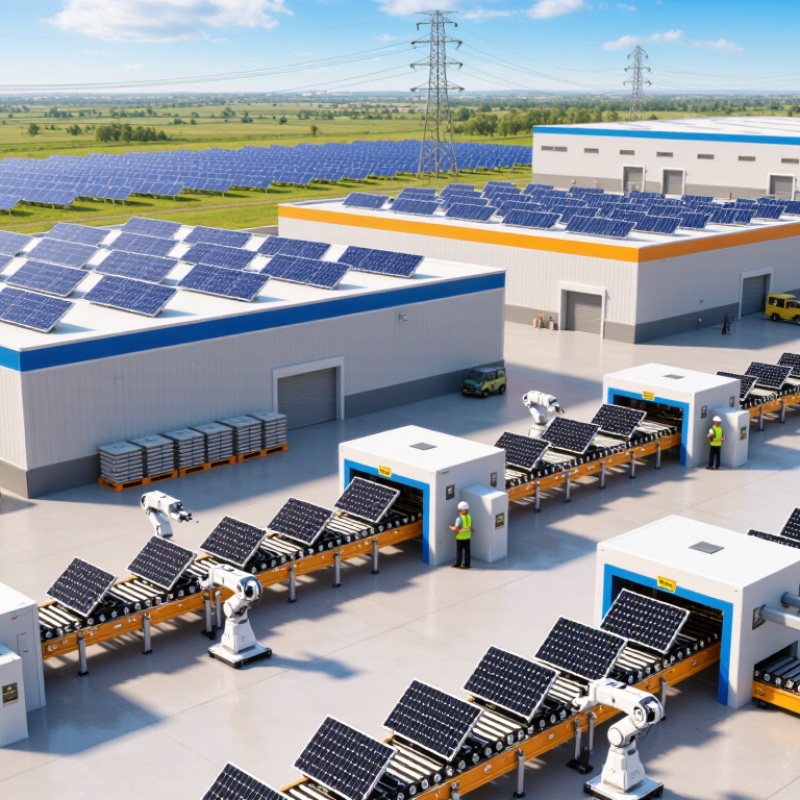
China’s solar panel manufacturing landscape is defined by scale, integration, and intense price competition. According to the International Energy Agency’s Renewables 2024 report, China installed as much solar photovoltaic capacity in 2023 as the entire world installed in 2022. This demand supports large production networks for polysilicon, wafers, cells, and modules.
The supply chain is remarkably concentrated. The IEA reported that China held more than 80% of global manufacturing capacity across key photovoltaic stages in 2023. IRENA’s Renewable Capacity Statistics 2025 also recorded China as the leading contributor to new solar capacity worldwide in 2024. Large factories can reduce costs and shorten delivery schedules. They can also create pressure to compromise on inspection time.
Scale is not the whole story. Global buyers should examine cell technology, factory certifications, degradation guarantees, and independent testing results. Production dates matter, especially when modules wait in humid ports or hot warehouses. A lower quotation may hide weaker documentation or less responsive after-sales support. That is easy to underestimate.
The landscape is still changing. Overcapacity concerns, trade policies, and rising traceability requirements may reshape export strategies. Industry reports provide useful direction, but they cannot replace factory audits and sample testing. Data can look precise. Reality is sometimes less tidy.
Key Criteria for Evaluating Chinese Solar Panel Manufacturers
China Best Solar Panel Manufacturers for Global Buyers
Key Criteria for Evaluating Chinese Solar Panel Manufacturers
Evaluating Chinese solar panel manufacturers requires more than comparing quoted prices. Ask for factory records, production capacity, and recent quality reports. A factory visit can reveal clean assembly lines, calibrated testing equipment, and organized material storage. Photos alone are not enough.
Check whether the panels meet recognized international standards, such as IEC testing requirements. Review test reports from independent laboratories, not only internal documents. Confirm cell technology, power tolerance, temperature coefficient, and expected degradation. These details affect output on a hot rooftop. Request serial-number traceability for each production batch. It helps identify defective modules quickly.
Quality control should cover incoming materials, lamination, electroluminescence testing, and final inspection. Ask how the manufacturer handles cracked cells, weak solder joints, and packaging damage. Warranty wording deserves careful reading. It should clearly separate product defects from performance guarantees. Also examine replacement procedures, response times, and spare-part availability in your market.
A small sample order can expose problems before a container shipment. Measure dimensions, connector fit, glass quality, and actual power under controlled conditions. Third-party inspection adds useful evidence, although it cannot detect everything. No audit is perfect. My own evaluation process would still leave room for field testing after installation. A supplier may communicate well before payment, then respond slowly after delivery. Check references from buyers with similar climate, grid conditions, and project size.
Leading Manufacturers and Their Product Capabilities
Global buyers should assess solar panel manufacturers beyond production volume. Production scale matters, but it does not prove quality. Ask how cells are sorted, soldered, and inspected. Serious facilities document each step. Look for automated electroluminescence testing, controlled lamination, and traceable serial records. These details expose hidden cracks before shipment. Small details matter.
Leading manufacturers often provide monocrystalline panels, bifacial modules, half-cell designs, and customized frame options. Some support rooftop, utility-scale, agricultural, and floating solar projects. A suitable supplier should explain power ranges, efficiency data, temperature coefficients, and mechanical-load ratings clearly. For hot regions, ventilation and heat-loss performance deserve attention. For coastal projects, corrosion resistance needs practical evidence, not attractive wording. Do not accept vague yield estimates.
A credible manufacturer can share test reports, factory-audit records, installation guidance, and transparent warranty conditions. Buyers should verify whether product claims match independent laboratory results. Sample testing is useful, especially when large orders involve different production batches. No factory is perfect. Some suppliers communicate technical information poorly, even when their equipment is capable. That weakness deserves discussion. I would rather choose a manufacturer that admits production limits than one offering flawless promises. Buyers should also compare packaging methods, spare-part support, response times, and documented procedures for handling transport damage.
Certifications, Standards, and Global Export Requirements
China remains a major source of photovoltaic modules for global buyers. However, certification often determines whether a shipment clears smoothly. The IEA’s Renewables 2024 report recorded about 420 GW of global solar additions in 2023. IRENA reported a lower figure, about 346 GW, because its methodology differs. This gap deserves attention.
For export projects, request current IEC 61215 and IEC 61730 test reports from an accredited laboratory. IEC 61215 evaluates design durability, while IEC 61730 addresses module safety. Coastal installations may require IEC 61701 salt-mist testing. Hot, humid regions may also need IEC 60068 environmental testing. Certificates alone are not enough. Check the exact model number, production site, test date, and certificate scope. European shipments commonly require CE documentation and a Declaration of Conformity. UK shipments may require UKCA evidence. North American markets can request different safety listings. Requirements vary by destination.
Tips: Build a document checklist before signing. Include the commercial invoice, packing list, bill of lading, certificate of origin, HS classification, warranty terms, and test reports. Ask for serial-number traceability and a pre-shipment inspection. The IEA PVPS Trends 2024 report highlights continuing pressure on prices and manufacturing capacity. That pressure can encourage rushed documentation. I have seen buyers focus on wattage while overlooking fire classification or connector compatibility. A small mistake can delay a container. Certification is not a one-time promise; it needs verification against every shipment.
| Compliance Area | Requirement or Certification | Typical Status | Applicable Standard or Regulatory Basis | Documents or Evidence to Request | Global Export Considerations |
|---|---|---|---|---|---|
| PV Module Design Qualification | Testing for long-term performance under temperature, humidity, mechanical load, ultraviolet exposure, and other environmental conditions. | Commonly Required | IEC 61215 series | Valid test report issued by an accredited laboratory; module model, construction, and bill of materials should match the tested product. | Frequently requested by international distributors, project developers, insurers, and utility-scale buyers. |
| Electrical and Fire Safety | Protection against electric shock, fire hazards, insulation failure, and mechanical safety risks. | Commonly Required | IEC 61730 series | Safety test report, certificate, electrical class, maximum system voltage, fire classification where applicable, and installation instructions. | Destination-market authorities or grid programs may require national adoption of the IEC safety standard. |
| Manufacturing Quality Management | Documented quality controls covering incoming materials, production processes, traceability, testing, nonconformity handling, and corrective actions. | Commonly Requested | ISO 9001:2015 | Current certificate, certification scope, issuing body, validity dates, and factory address covered by the certificate. | ISO 9001 does not certify module performance by itself; it demonstrates the structure of the manufacturer’s quality management system. |
| PV Manufacturing Process Control | Quality-system guidance specifically intended for the production of crystalline silicon and thin-film PV modules. | Buyer Dependent | IEC 62941 | Factory audit report, process-control records, product traceability procedure, and evidence of periodic production testing. | Particularly useful for long-term supply agreements, private-label programs, and large commercial projects. |
| European Union Product Marking | Conformity assessment and CE marking where the finished product falls within applicable EU product legislation. | Conditional | Applicable EU legislation may include electrical safety, electromagnetic compatibility, RoHS, and other product rules depending on product design. | EU Declaration of Conformity, technical file, risk assessment, test reports, product label, and user instructions. | CE marking is a manufacturer’s declaration of conformity; it is not a general quality mark. The exact legislation depends on the product configuration. |
| EU Substance Restrictions | Controls on restricted substances in electrical and electronic equipment placed on the EU market. | Market Dependent | Directive 2011/65/EU and applicable amendments, commonly known as RoHS | Material declarations, supplier declarations, laboratory screening results where needed, and technical documentation. | Buyers should confirm whether the complete module, junction box, cables, connectors, and accessories are within the applicable product scope. |
| EU Waste and Recycling Obligations | Producer responsibility for collection, reporting, financing, and recycling of photovoltaic panels after use. | Market Dependent | Directive 2012/19/EU on waste electrical and electronic equipment, plus national implementing rules | Producer registration evidence, authorized representative details where relevant, recycling scheme contract, and crossed-out wheeled-bin marking. | Obligations normally fall on the entity placing the product on the national market, which may be the importer or distributor rather than the factory. |
| United Kingdom Market Access | Product conformity, technical documentation, labeling, and importer responsibilities for Great Britain. | Market Dependent | Applicable UK product-safety and environmental regulations; conformity marking requirements depend on the product and current recognition rules. | Declaration of Conformity, technical file, English instructions, importer information, and required conformity marking. | Requirements differ between Great Britain and Northern Ireland; the importer should verify the current rules before shipment. |
| North American Projects | Nationally recognized safety certification and local electrical-code acceptance for modules and complete PV systems. | Project Dependent | Applicable national and regional electrical codes, certification schemes, and authority-having-jurisdiction requirements | Safety certification, installation manual, fire classification, electrical ratings, warranty terms, and local inspection documentation. | Utility, building, and incentive programs may impose requirements beyond the manufacturer’s basic export documentation. |
| Australia and New Zealand | Product compliance and approved-list eligibility for grid-connected or incentive-supported installations. | Program Dependent | Applicable national electrical safety rules, adopted IEC standards, and program-specific product listing requirements | IEC test reports, local listing evidence where required, product datasheet, installation manual, and warranty documentation. | Eligibility for government incentives or grid programs may require listing by an approved local body and may change over time. |
| India Market Entry | Compliance with applicable Indian product standards and any current registration or approved-product-list requirements. | Market Dependent | Relevant Indian Standards and current Ministry or electrical-authority requirements | Applicable registration certificate, test reports, factory details, model list, labeling, and importer documentation. | Requirements can differ by project type, government procurement, grid connection, and incentive eligibility. |
| Customs Classification | Correct tariff classification for photovoltaic cells assembled in modules or panels. | Import Requirement | HS heading 8541; photovoltaic cells assembled in modules or made up into panels are commonly classified under HS 8541.43, subject to national tariff schedules. | Commercial invoice, packing list, product description, customs declaration, country of origin, and applicable tariff code. | Import duties, trade remedies, quotas, and statistical suffixes must be checked for the destination country before contracting. |
| Shipping and Commercial Documents | Documents needed for customs clearance, transport booking, payment, and cargo release. | Import Requirement | Destination-country customs rules and international trade terms agreed in the sales contract | Commercial invoice, packing list, bill of lading or airway bill, certificate of origin where requested, insurance certificate, and sales contract. | Descriptions, quantities, weights, serial numbers, consignee details, and Incoterms should be consistent across all documents. |
| Packaging and Wooden Materials | Treatment and marking of wood packaging used for crates, pallets, and packing supports. | Where Applicable | ISPM 15 for regulated wood packaging material in international trade | Visible IPPC treatment mark on qualifying wood packaging, packing declaration, and fumigation documentation where required. | Use of plastic or metal packaging may avoid some wood-packaging obligations, but destination customs rules still apply. |
| Product Technical Datasheet | Accurate electrical, mechanical, environmental, and performance information for engineering and customs review. | Buyer Requirement | Data should be consistent with the tested module design and applicable IEC documentation. | Rated power, power tolerance, module efficiency, voltage at maximum power, current at maximum power, open-circuit voltage, short-circuit current, dimensions, weight, connector type, and temperature coefficients. | Datasheet values should match the exact model and production version shipped; inconsistent data can delay technical approval or customs clearance. |
| Warranty and After-Sales Support | Defined product warranty, performance warranty, claims procedure, spare-parts policy, and technical support process. | Commercially Important | Contract terms, applicable consumer or commercial laws, and project-specific requirements | Signed warranty document, degradation schedule, exclusions, claim contact, response time, serial-number traceability, and dispute-resolution terms. | Buyers should verify the legal entity providing the warranty, governing law, payment of replacement freight, and availability of long-term service support. |

Sourcing, Pricing, and Quality Control for International Buyers
International buyers need more than a low quotation when sourcing solar panels from China. The IEA PVPS Trends 2024 report recorded about 447 GW of new solar capacity worldwide in 2023. That scale increases factory choices, but it also complicates supplier verification. Request recent production records, audited financial information, and traceable component lists. A video tour helps, although it never replaces an independent factory inspection.
Price needs context. IRENA’s Renewable Power Generation Costs in 2023 reported a 12% decline in utility-scale solar electricity costs, reaching about USD 0.044 per kWh. This does not mean every panel quotation should fall equally. Compare module efficiency, warranty terms, degradation rates, packaging, insurance, and delivery conditions. Ask for a complete landed-cost sheet. A cheap ex-works offer can become expensive after freight, testing, and customs handling.
Quality control should be written into the purchase contract. Specify IEC 61215 and IEC 61730 compliance, serial-number traceability, electroluminescence testing, flash-test records, and an agreed inspection agency. Use independent sampling before shipment, not only factory-provided photographs. Check cell cracks, power deviation, connector condition, and carton moisture protection. One overlooked detail can affect an entire container. The process is not perfect. Sampling can miss hidden defects, and supplier documents may become outdated. Recheck critical evidence before each order, especially when production shifts between facilities.
Related Posts
-
The Future of Energy How Solar Panels are Transforming Our World
-
Comprehensive Resource on Solar Panel Systems for Global Buyers
-
Why Choose Solar Power for Your Global Business?
-
Challenges Faced by Global Buyers in Sourcing Solar Energy Systems
-
Common Challenges Faced by Homeowners When Choosing Residential Solar Solutions
-
Unlocking the Benefits of Solar Power Solutions for Your Business