Top Portable Solar Power Stations in China for Buyers
Choosing among the top portable solar power stations in China requires more than comparing headline wattage. Buyers should examine usable battery capacity, inverter output, solar input limits, charging speed, weight, warranty terms, and local after-sales support. A bright product page cannot answer every question. The fine print matters.
Energy expert Amory Lovins has emphasized, “Efficiency is the largest, cheapest, cleanest, safest, and most secure energy resource.” That principle is useful when comparing Portable Solar Power systems: a well-matched station can deliver more practical value than a larger, heavier model with features you rarely use. Consider a weekend campsite, a small apartment backup, or a worksite where outlets are scarce. Each calls for different capacity and portability.
Details count. Check whether the listed capacity is measured in watt-hours, whether solar panels are included, and how quickly the unit recharges under realistic sunlight. Cloud cover, panel angle, and temperature can change results. A 500-watt-hour station may run a small fan for hours, yet drain quickly when powering a kettle. Those trade-offs are easy to overlook.
This guide compares leading options available to buyers in China, including their strengths, limits, and best-fit uses. It also raises questions that product specifications alone may not settle. Some comparisons are imperfect; published test conditions can differ. Treat advertised performance as a starting point, then verify the details with the seller.
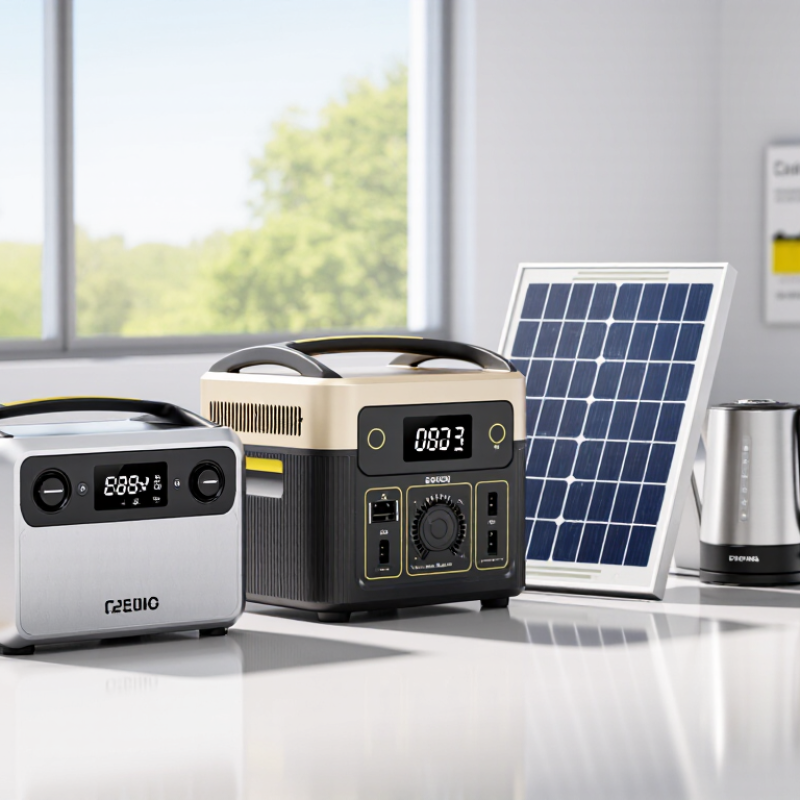
What Portable Solar Power Stations Are and How They Work
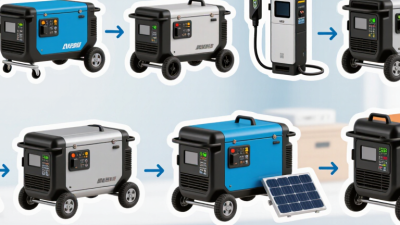
A portable solar power station combines a rechargeable battery, charge controller, and inverter in one movable unit. Solar panels convert sunlight into direct current, which the controller regulates before storing it in the battery. When you plug in a lamp or laptop, the inverter converts stored power into alternating current. Some devices also provide direct-current ports, which avoid that conversion step.
The technology sits within a fast-growing solar sector. IEA PVPS reported that global photovoltaic installations reached about 447 gigawatts in 2023, reflecting the wider adoption of solar generation. That figure describes grid-connected and other installations, not portable stations specifically. Still, it shows how established the panel technology behind portable charging has become. Output varies. A panel rated at 100 watts will not deliver that amount continuously: cloud cover, angle, heat, and shading all matter. Even a thin branch across one corner can reduce useful charging.
For buyers in China, check battery capacity in watt-hours and output limits in watts. A 500-watt-hour battery could theoretically run a 50-watt light for ten hours, but inverter losses and device behavior shorten that time. Real use is messier. Charging may slow near dusk, and a small panel can struggle to refill a large battery in one day. IEA PVPS’s Snapshot of Global PV Markets 2024 offers useful context on the solar industry, but portable-station performance still depends on the unit’s specifications and actual conditions.
Top Portable Solar Power Stations in China for Buyers: What They Are and How They Work
A portable solar power station stores electricity in a battery. Solar panels generate DC power, a charge controller regulates the incoming energy, and an inverter converts stored DC power into AC power for compatible devices.
Estimated runtime at a 100 W load: The chart assumes 85% of rated battery capacity is available for AC use after conversion losses. Actual runtime varies with the device, inverter efficiency, temperature, and power station design.
Key Specifications That Define Their Performance
When comparing portable solar power stations in China, start with usable capacity and continuous output. Capacity, measured in watt-hours, estimates runtime; output, measured in watts, limits which devices can run together. A 500 Wh unit might power a 50 W fan for roughly eight to nine hours after conversion losses. Check the surge rating for refrigerators or pumps, which can draw extra power when starting. Label figures are only a starting point.
Battery chemistry affects weight, lifespan, and value. Lithium iron phosphate batteries often offer more charge cycles than conventional lithium-ion options, but they may weigh more. Compare cycle-life claims at a stated remaining-capacity threshold. For solar charging, check maximum input voltage and current, connector type, and MPPT support. Cloudy weather slows charging. Also consider AC recharge time, port selection, fan noise, and operating temperature. I would not choose by capacity alone; a bulky unit may end up unused because it is awkward to carry.
Tips: Match the output rating to your devices, then allow a safety margin. Check the manual’s charging limits before pairing panels. Real-world performance can differ from test conditions.
Leading Portable Solar Power Station Options in China
China offers several useful portable solar power station options, from compact units for phones and lights to larger systems for refrigerators and work tools. The best fit depends on what you need to run, not the biggest capacity printed on a product page.
Check the rated watt-hours and continuous output separately. A small fan may run for hours, while a kettle can drain a battery quickly or exceed its output limit. That distinction matters.
For buyers comparing Chinese-made options, look for clear battery specifications, realistic recharge times, and compatible solar input ranges. A foldable panel can be handy at a campsite, but shade from a tent or tree may slow charging considerably. Check the label.
Also review warranty terms, local service access, and whether the package includes the cables you need. Product listings sometimes leave these details unclear, and that is worth questioning.
A lighter station is easier to carry, yet may provide less stored energy; a larger one can be awkward on stairs. Compare published figures with your actual appliances, and allow a margin for conversion losses and cloudy weather.
How to Match a Power Station to Your Energy Needs
Matching a portable power station starts with a load list, not its headline capacity. Add each device’s watts and daily running hours to estimate watt-hours. For example, a 60-watt laptop used for four hours needs 240 watt-hours; a 12-watt router used for eight hours adds 96. That is 336 watt-hours before conversion losses or reserve. A 500–600 Wh unit may fit this example, but check usable capacity and output limits. Check the labels.
Also compare continuous output with the devices’ combined draw, and check surge ratings for equipment with motors. Solar charging depends on weather, panel angle, and shade. NREL’s PVWatts model uses a default 14% system-loss assumption for grid-connected solar estimates; it is not a portable-station guarantee, but it shows why panel-rated watts rarely equal stored energy. Leave room for cloudy afternoons.
A practical test is to list the essentials for one evening: phone, router, lights, or a medical device. Verify each device’s actual label rating, then add a modest reserve. I still see people size only for battery capacity and overlook output limits; that is an easy mistake. NREL, PVWatts Version 5 Technical Reference, NREL/TP-6A20-62641.
Top Portable Solar Power Stations in China for Buyers - How to Match a Power Station to Your Energy Needs
| Planning Class |
Typical Battery Capacity |
Typical Continuous AC Output |
Common Solar Input Range |
Best Suited For |
Illustrative Runtime |
| Compact |
200–400 Wh |
150–500 W |
About 100–200 W |
Phones, tablets, cameras, small lights, and short laptop charging sessions. |
A 300 Wh unit may run a 60 W laptop for about 4 hours, based on roughly 80% usable battery energy. |
| Everyday |
400–800 Wh |
500–1,000 W |
About 200–400 W |
Weekend camping, several small devices, a laptop, lighting, and selected low-power appliances. |
A 600 Wh unit may run a refrigerator averaging 60 W for about 8 hours. Actual refrigerator consumption varies with cycling and conditions. |
| Extended Backup |
800–1,500 Wh |
1,000–2,000 W |
About 400–800 W |
Longer outages, multiple devices, and some household appliances whose starting and running power are within the unit’s limits. |
A 1,000 Wh unit may run a refrigerator averaging 60 W for about 13 hours, allowing for conversion losses and reserve capacity. |
| High-Capacity |
1,500–3,000 Wh |
2,000–3,000 W |
About 600–1,200 W |
Extended backup or off-grid use with several loads; check appliance start-up surges and the station’s maximum output. |
A 2,000 Wh unit may run a refrigerator averaging 60 W for about 27 hours, before any solar replenishment. |
How to choose: Add the watt-hours needed by the devices you plan to use, then allow extra capacity for inverter losses and unexpected use. Check both continuous output and surge output against each appliance. Solar input limits, charging time, usable capacity, and runtime vary by product; panel compatibility and sunlight conditions should also be verified. Runtime examples are estimates, not guarantees.
What Buyers Should Check Before Purchasing in China
When comparing portable solar power stations in China, check the usable capacity, not just the large number on the product page. A 1,000 Wh rating does not mean every device can draw 1,000 Wh; conversion losses reduce the energy available at the outlets. Ask for continuous AC output and surge capacity, then compare them with your appliances. A kettle may exceed the unit’s limit. Check carefully.
Battery chemistry matters, but so does the evidence behind its stated lifespan. Ask how cycle life was tested, including the remaining capacity and test conditions. Request clear photos of the rating label, ports, and included cables. For solar charging, confirm the input voltage and connector type. A panel that looks compatible may still exceed the station’s input range.
Before paying, get the warranty period, repair process, and spare-parts availability in writing. Clarify whether quoted prices include packaging, shipping, and any buyer-specific fees. If possible, ask for a sample unit and run a basic test: charge it, power a small lamp, and compare the displayed output with the expected load. That test is not a lab report. Still, it can expose unclear instructions or awkward controls. I would not rely on polished listings alone; specifications sometimes leave practical questions unanswered.