
10 Residential Solar Buying Tips for Global Buyers?
Buying Residential Solar across borders can feel like comparing apples, oranges, and unfamiliar roof tiles. Yet the decision becomes clearer when buyers examine performance, service, and long-term costs together.
This guide presents ten practical buying tips for homeowners worldwide. It considers sunlight levels, roof direction, panel efficiency, inverter quality, battery storage, warranties, installation standards, and local electricity prices. A system that performs well in Australia may need different planning in Germany, Kenya, or Canada. Climate matters. So do humidity, snow, dust, grid reliability, and seasonal daylight. Ask installers for production estimates based on your address, not attractive regional averages. Request itemized quotations, certification details, maintenance terms, and realistic payback calculations. Keep every document.
Amory Lovins, a respected energy analyst and energy-efficiency advocate, said, “The cheapest energy is the energy you don’t use.” His point deserves attention before any panel purchase. Improving insulation, sealing drafts, and replacing inefficient appliances may reduce system size and upfront cost. That step is often overlooked.
Still, no guide can remove every uncertainty. Roof conditions may be hidden until installation begins. Incentives can change. Battery savings may disappoint if usage patterns differ. I have seen buyers focus heavily on panel wattage while ignoring installer reliability and warranty support. That is a costly imbalance. Use these tips as a questioning framework, not a universal promise. Good Residential Solar decisions combine measured data, qualified local advice, and a willingness to reconsider optimistic assumptions.
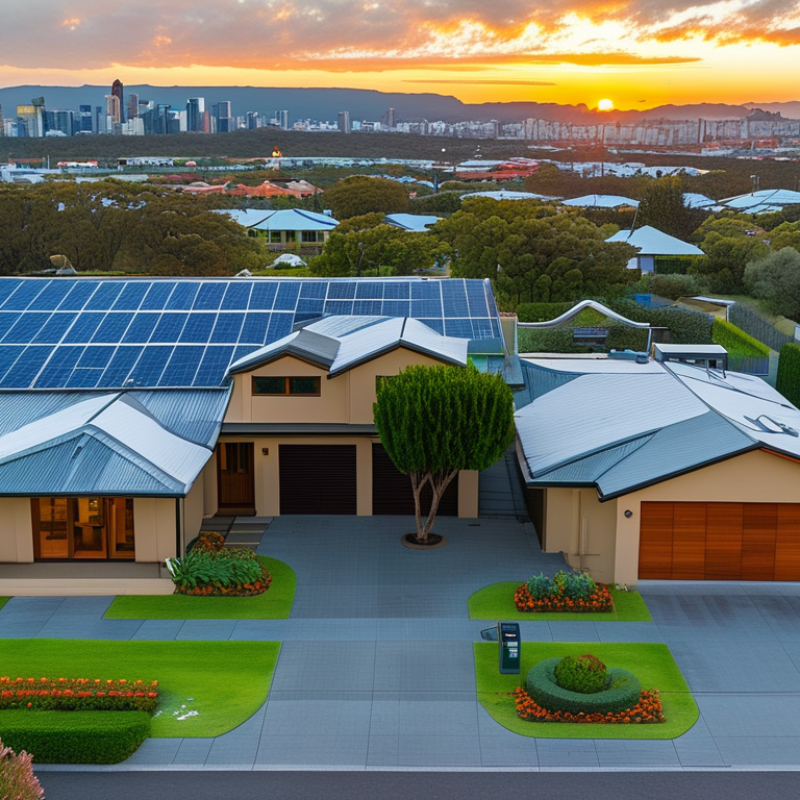
Measure Solar Potential and Roof Suitability Using Local Irradiance Data
A reliable solar purchase begins with local irradiance, not a colorful product brochure. Check Global Horizontal Irradiance and photovoltaic power potential for your exact address. The World Bank’s Global Solar Atlas reports annual PV output in kilowatt-hours per installed kilowatt. This measure is more useful than sunshine hours alone.
Compare the map with nearby weather-station records. The International Energy Agency’s PVPS Trends 2024 report recorded about 456 gigawatts of new solar capacity worldwide in 2023. Rapid growth does not guarantee equal rooftop performance. Coastal haze, seasonal clouds, snow, and dust can reduce actual production. A roof facing the equator usually performs well, but orientation, pitch, and shading matter more than simple compass direction. Inspect chimneys, trees, neighboring walls, and morning shadows. Even a small shadow can affect several connected panels.
Tips: Request at least twelve months of local irradiance data. Use hourly simulations when available. Measure roof dimensions yourself, then verify them professionally. Check structural condition before purchasing equipment. Leave space around vents and maintenance paths. A roof needing replacement soon may make a cheap installation expensive later. I have seen estimates look precise while ignoring afternoon shade. That is a warning. Ask for a conservative annual yield, not only the best-case figure. Record assumptions about tilt, losses, temperature, snow, and inverter downtime. Data can still be imperfect. Your roof is not a laboratory.
| No. | Buying Tip | What to Measure | Practical Benchmark | How to Interpret the Result | Useful Unit or Data Source |
|---|---|---|---|---|---|
| 1 | Start with local solar irradiance | Annual global horizontal irradiation (GHI) at the property location. | 1,200–2,200 kWh/m²/year covers a broad range of viable residential solar markets. | Higher GHI generally means more annual energy from the same installed capacity. Use local roof-level data rather than a national average. | kWh/m²/year; local meteorological records or validated solar-atlas data. |
| 2 | Use plane-of-array irradiance for roof estimates | Solar irradiation on the roof’s actual tilt and azimuth, not only horizontal irradiation. | Compare roof-specific irradiation with the site’s GHI; a well-oriented roof can receive substantially more useful sunlight than a poorly oriented one. | Plane-of-array irradiation is more appropriate for estimating photovoltaic output because modules are installed on a plane, not horizontally. | POA irradiation in kWh/m²/year; include roof tilt, azimuth, and horizon shading. |
| 3 | Check roof orientation | Roof azimuth relative to the equator-facing direction. | In the Northern Hemisphere, south-facing roofs are usually preferred; in the Southern Hemisphere, north-facing roofs are usually preferred. East- and west-facing roofs can still be productive. | Orientation affects daily production timing and annual yield. East-facing systems tend to produce more in the morning, while west-facing systems tend to produce more in the afternoon. | Azimuth in degrees; define 0° as true north or use the convention of the selected solar tool. |
| 4 | Evaluate roof tilt | Roof pitch or module tilt angle. | For annual production, a fixed tilt broadly near the site latitude is often a useful starting point, but local weather, roof design, and wind conditions may justify a different angle. | Small deviations from the optimum usually have a modest effect. Roof layout, safety, and mounting cost can be more important than achieving a perfect angle. | Degrees from horizontal; verify with a digital inclinometer or site survey. |
| 5 | Quantify shade before purchasing | Annual shading loss from trees, chimneys, nearby buildings, poles, and roof structures. | Below 10% annual shade loss is a strong target; persistent midday shading requires redesign or removal where permitted. | Short periods of shade can reduce the output of affected modules. Use hourly or monthly shading analysis rather than judging the roof from a single visit. | Annual percentage loss; use a sun-path survey, 3D model, or site-specific shade report. |
| 6 | Measure usable roof area | Unobstructed roof area after setbacks, walkways, fire-access requirements, vents, skylights, and maintenance clearances. | A typical residential module occupies approximately 1.6–2.2 m²; reserve additional space for mounting gaps and access. | Calculate the layout using usable dimensions, not the total roof footprint. Local building and fire codes may reduce the available area. | Square metres; measure each roof plane separately. |
| 7 | Confirm roof age and remaining life | Roof covering, waterproofing condition, repair history, and expected replacement date. | If major roof work may be needed within approximately 5–10 years, repair or replace the roof before installing solar. | Removing and reinstalling a solar array adds labour and potential equipment costs. A sound roof reduces long-term project risk. | Years of remaining service life; obtain an independent roof inspection where necessary. |
| 8 | Verify structural capacity and weather exposure | Roof load capacity, wind zone, snow load, seismic requirements, and mounting attachment points. | Solar equipment commonly adds roughly 10–25 kg/m², but the actual design load depends on the system, roof, wind, snow, and local code. | Never approve a system from module weight alone. A qualified structural professional should confirm the roof and attachment design. | kg/m² and local design loads; use current building-code requirements. |
| 9 | Match system size to electricity use | Monthly electricity consumption, seasonal demand, tariff structure, and export limits. | Use at least 12 months of utility data. Size the system from annual and hourly load patterns rather than roof area alone. | A large roof does not automatically justify a large system. Local net-metering, feed-in, or export rules can affect the financially sensible size. | kWh/month, kWh/year, and kW peak demand; use utility bills or a smart-meter export. |
| 10 | Estimate yield with conservative assumptions | Expected annual specific yield after temperature, inverter, wiring, mismatch, soiling, snow, and shading losses. | Many residential systems produce approximately 800–1,800 kWh per installed kW per year, depending strongly on climate, orientation, and losses. | Compare the forecast with measured consumption and local electricity prices. Request both an annual total and a month-by-month production estimate. | kWh/kW/year; use a site-specific simulation with local irradiance and documented loss assumptions. |
Note: The benchmarks are planning ranges, not a substitute for a site survey. Final output depends on local irradiance, roof geometry, weather, equipment configuration, installation quality, grid rules, and applicable building and electrical codes.
Related Posts
-
2026 Top Residential Solar Panels for Global Buyers
-
Discovering Reliable Suppliers for Solar Power Solutions Around the World
-

What is the Future of Solar Energy Innovations for Sustainable Business Growth
-

Top Solar Technologies to Harness for a Sustainable Future?
-

How to Maximize Your Home Energy Efficiency with Solar Energy Solutions
-
Unlocking the Future: Exploring Innovative Solar Power Solutions for Sustainable Living
