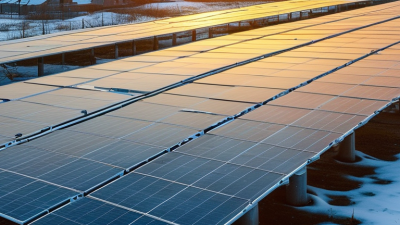
China Top Residential Solar Systems Manufacturers?
China has become a central force in the global solar manufacturing industry. According to the IEA’s Renewables 2024 report, China is expected to deliver almost 60% of new renewable power capacity worldwide through 2030. Solar power drives much of this expansion. The IEA PVPS Trends 2024 report also recorded more than 400 gigawatts of global photovoltaic additions in 2023, with China contributing the largest share. These figures explain why buyers are examining Chinese Residential Solar Systems more closely.
This guide introduces leading Chinese manufacturers serving household energy needs. The evaluation considers module efficiency, inverter compatibility, battery safety, warranty coverage, certification, and after-sales service. The details matter. A reliable system should perform across rooftops, seasons, and changing electricity demand. Manufacturers such as JinkoSolar, LONGi, JA Solar, Trina Solar, Sungrow, and GoodWe have gained international recognition through large production capacity and documented technology investment. However, factory size alone does not guarantee a suitable residential solution. A smaller supplier may offer better local support, while a famous brand may provide weaker service in a specific market.
Industry reports provide useful direction, but they do not replace technical due diligence. Buyers should verify IEC certifications, product warranties, degradation rates, monitoring functions, and installer qualifications. Energy storage claims also require careful reading. “Long life” can mean different testing conditions. No shortlist is perfect. This overview therefore compares manufacturers through practical evidence, not promotional language. Roof structure, sunlight, grid rules, and household consumption must shape the final decision. The best Residential Solar Systems manufacturer is not always the largest one, but the one that delivers dependable performance and accountable support.
Understanding China’s Residential Solar System Manufacturing Industry
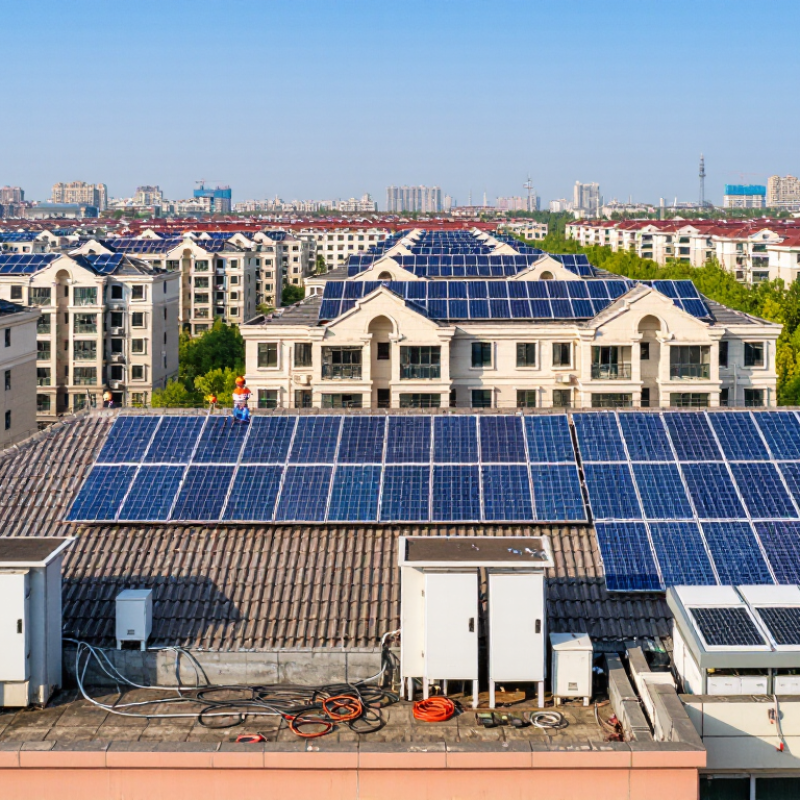
China’s residential solar system manufacturing industry covers panels, inverters, batteries, mounting structures, and monitoring devices. Manufacturers often operate integrated production lines, allowing tighter control over component compatibility. Large production volumes can reduce costs, but price alone says little about reliability. Buyers should examine factory testing records, material traceability, and warranty conditions before selecting a supplier.
Quality control usually begins with incoming material inspections. Cells, aluminum frames, cables, and battery modules need separate checks. Automated equipment improves consistency, while trained technicians catch defects that machines may miss. Residential systems face heat, humidity, dust, and unstable grid conditions. Therefore, manufacturers should conduct thermal cycling, insulation, vibration, and safety tests under realistic conditions. Certification matters, but it does not replace independent verification.
Customization is another important feature of China’s manufacturing sector. Suppliers may adjust battery capacity, enclosure design, communication protocols, and packaging for different markets. Installation feedback can expose practical problems, such as unclear wiring labels or heavy wall-mounted units. These details seem minor. They are not. No production line is flawless, and some technical documents remain too general. Careful buyers should request sample inspections, updated test reports, spare-parts policies, and clear technical support before placing large orders.
How to Evaluate Residential Solar System Manufacturers in China
Choosing a residential solar system manufacturer in China requires more than comparing panel prices. Look for evidence from real installations, not polished brochures. Ask for factory audit records, production capacity, and quality-control procedures. A reliable supplier should explain cell sourcing, inverter compatibility, battery safety, and warranty conditions clearly. Request serial-number tracking and sample inspection reports. Details matter.
Technical evaluation should match your home’s actual conditions. Review power tolerance, temperature coefficients, waterproof ratings, and test data from recognized laboratories. For battery systems, check usable capacity, cycle life, thermal management, and replacement procedures. Experienced engineers should provide load calculations based on roof direction, shading, seasonal demand, and local grid rules. Do not accept a generic design too quickly. It may look efficient on paper.
Reliability also appears after the sale. Confirm response times, spare-parts availability, installer training, and failure-handling procedures. Read warranty exclusions carefully; labor, transport, and battery degradation may be treated differently. Compare at least three quotations and ask each supplier to explain one unusual assumption. That conversation often reveals practical competence. No manufacturer is perfect. Record both strengths and unresolved concerns before signing.
How to Evaluate Residential Solar System Manufacturers in China
The chart presents a practical procurement weighting model for comparing residential solar system manufacturers. Product safety and long-term reliability receive the highest priority, followed by quality management, system performance, supply-chain capability, after-sales service, and compliance documentation. Buyers should verify certifications such as IEC 61215 and IEC 61730, warranty terms, factory quality controls, test reports, and local service capacity before making a final decision.
Leading Chinese Manufacturers of Residential Solar Panels and Inverters
China has become a major production base for residential solar panels and inverters. Leading manufacturers combine automated factories, tested materials, and large export experience. Their panels often use monocrystalline cells, protective glass, and corrosion-resistant frames. These details matter on rooftops exposed to rain, dust, and strong sunlight.
Reliable manufacturers also develop inverters for different household conditions. Hybrid inverters can connect solar panels, batteries, and the local grid. Microinverters may perform better on roofs with partial shade. Professional suppliers usually provide efficiency data, safety documents, warranty terms, and installation guidance.
However, printed specifications do not tell everything. Real performance can change with heat, roof direction, dust, and poor ventilation. A careful buyer should request independent test reports and clarify after-sales support before ordering.
Tips:
Check certifications accepted in your target market. Compare inverter efficiency at realistic loads, not only peak ratings. Ask how replacement parts are supplied. Examine the warranty exclusions carefully. A low purchase price may hide training, transport, or service costs. I have found that product matching is often overlooked. A powerful panel system can still perform poorly when the inverter is incorrectly sized. Even experienced installers can miss this detail.
Key Technologies Used in Chinese Home Solar Energy Systems
China Top Residential Solar Systems Manufacturers?
Key Technologies Used in Chinese Home Solar Energy Systems
Chinese residential solar systems increasingly combine high-efficiency photovoltaic modules, hybrid inverters, and lithium iron phosphate batteries. These technologies support both daytime consumption and evening backup. Maximum power point tracking helps panels produce more energy during changing sunlight. Hybrid inverters can also manage grid power, battery charging, and household loads.
A reliable system needs more than attractive specifications. Battery management systems monitor temperature, voltage, and charging balance. Smart meters measure electricity flow in real time. Remote monitoring can reveal unusual output before a small fault becomes expensive. In practical home installations, cable quality, ventilation, and waterproof connectors matter greatly. No system is perfect. Dust, shading, and winter temperatures still reduce performance. Some product data also looks better in laboratories than on rooftops. Independent testing and qualified installation deserve careful attention.
Tips: Check the roof’s shading throughout the day. Ask for protection ratings and safety certifications. Confirm the battery’s usable capacity, not only its advertised size. Leave space around the inverter for cooling and maintenance. A professional installer should explain emergency shutdown procedures clearly.
China Top Residential Solar Systems Manufacturers? - Key Technologies Used in Chinese Home Solar Energy Systems
| System Area | Common Technology | Typical Residential Specification | Main Technical Benefit | Important Selection Considerations |
|---|---|---|---|---|
| PV Modules | N-type monocrystalline silicon cells, including TOPCon and heterojunction designs | Approximately 400–650 W per module; module efficiency commonly about 20%–24% | Higher power density, reduced light-induced degradation, and improved performance in limited roof space | Roof dimensions, shading, module temperature coefficient, mechanical load rating, and product certification |
| Module Layout | Series-connected strings with multiple maximum power point tracking inputs | Residential systems commonly use several modules per string, subject to inverter voltage limits | Converts variable solar output into a usable DC input while allowing separate roof orientations to operate more effectively | String voltage must remain within the inverter operating range during both high and low temperatures |
| Power Inverter | Single-phase or three-phase grid-connected string inverter | Typical household capacity: approximately 3–15 kW; peak efficiency often above 97% | Changes direct current into grid-compatible alternating current and manages grid synchronization | Output phase, MPPT count, operating voltage, backup capability, protection functions, and local grid requirements |
| Hybrid Energy Storage | Lithium iron phosphate battery integrated with a hybrid inverter | Common home storage capacity: approximately 5–30 kWh; usable capacity depends on the configured depth of discharge | Stores surplus daytime generation for evening use, backup supply, or time-of-use energy shifting | Usable energy, continuous power, backup load limit, operating temperature, cycle warranty, and battery safety controls |
| Battery Management | Cell-level monitoring with battery management system and active safety protection | Monitors voltage, current, temperature, state of charge, and state of health | Balances cells, limits abnormal operating conditions, and supports longer battery service life | Communication compatibility between battery and inverter, event logging, remote diagnostics, and thermal protection |
| Energy Management | Smart energy management system using load forecasting and real-time power measurement | Controls PV generation, battery charging, household loads, and grid import or export | Improves self-consumption and can coordinate appliances, electric water heating, and electric vehicle charging | Meter compatibility, communication protocol, data privacy, internet dependence, and local tariff structure |
| Safety Protection | DC isolator, overcurrent protection, surge protection, residual-current protection, and anti-islanding control | Protection devices are selected according to system voltage, current, installation method, and local code | Reduces electrical, surge, arc, and backfeed risks during normal operation and maintenance | Correct device ratings, coordinated protection, accessible isolation points, grounding, and qualified installation |
| Rapid Shutdown | Module-level or string-level rapid shutdown equipment where required by local regulations | Reduces conductor voltage on the array during an emergency shutdown sequence | Improves firefighter and maintenance safety on buildings with rooftop PV systems | Requirements vary by country, grid authority, building code, and system architecture |
| Mounting Structure | Aluminum alloy or galvanized steel rooftop mounting system | Fixed-angle installation; roof pitch and wind-load design depend on the building location | Provides mechanical stability while maintaining module orientation and ventilation clearance | Roof material, waterproofing method, corrosion resistance, snow load, wind load, and structural assessment |
| Monitoring and Connectivity | Wi-Fi, Ethernet, cellular, or RS485-connected monitoring gateway | Tracks energy production, consumption, battery status, alarms, and historical performance | Enables fault detection, performance verification, maintenance planning, and user control | Offline operation, cybersecurity, data ownership, firmware updates, and long-term platform support |
| Grid Interaction | Anti-islanding operation with export limitation and certified grid-support functions | Export power can be limited through a smart meter or current transformer where required | Supports safe grid connection and helps comply with zero-export or limited-export policies | Utility interconnection rules, permitted export level, voltage and frequency limits, and approval procedures |
| Standards and Certification | Applicable electrical, photovoltaic, battery, EMC, and grid-interconnection standards | Examples include IEC 61215, IEC 61730, IEC 62109, IEC 62477-1, IEC 62619, and IEC 62116, depending on equipment | Provides a framework for product safety, environmental testing, electromagnetic compatibility, and grid performance | Certification must match the destination market and should be verified for the exact model and configuration |
| System Performance | Performance evaluation based on solar resource, orientation, shading, temperature, and system losses | Annual yield varies widely by location; a well-designed system commonly operates with a performance ratio of roughly 75%–90% | Offers a more realistic measure of installed-system output than module nameplate power alone | Use site-specific solar data and account for soiling, mismatch, wiring, inverter, battery, and curtailment losses |
| Installation and Service | Pre-installation survey, electrical design, commissioning, and periodic inspection | Typical service activities include torque checks, visual inspection, insulation testing, firmware review, and performance analysis | Maintains safety, reliability, energy yield, and compliance throughout the system life cycle | Installer qualifications, spare-parts availability, response time, warranty terms, and local service capability |
Export Standards, Warranty Policies, and Buyer Considerations
China’s residential solar manufacturers now serve a rapidly expanding global market. IRENA reported 345.5 GW of new solar capacity worldwide in 2023. IEA PVPS also recorded more than 1.6 TW of global photovoltaic capacity by year-end.
Export quality begins with verification. Buyers should request IEC 61215 and IEC 61730 documentation for modules. Inverters usually require region-specific safety and grid certificates. Battery systems may need transport testing, including UN 38.3 compliance. ISO 9001 supports factory process control, but it does not guarantee every shipment. Inspect the actual production batch. Certificates can age.
Warranty wording deserves careful attention. Residential modules commonly offer 10 to 15 years for product defects and up to 25 or 30 years for performance. Inverters and batteries often carry shorter coverage. The real question is service access. Check who handles claims, where spare parts are stored, and whether labor and freight are included. A percentage-based output guarantee needs clear testing conditions. Shade, dust, temperature, and installation quality can affect results.
Look for serial-number tracking, third-party factory inspections, and documented degradation tests. Ask for English warranty terms and local dispute procedures. Payment milestones should match inspection points. Do not rely on a polished factory video. That is not enough. Some buyers overlook installer competence, yet poor cable routing can damage an otherwise reliable system. The uncomfortable detail is simple: the cheapest offer may become expensive when support crosses borders.
Related Posts
-
2026 Top Residential Solar Panels for Global Buyers
-
10 Residential Solar Buying Tips for Global Buyers?
-
China Top 10 Solar Energy Systems Suppliers for Global Buyers
-
10 Best Solar Installation Companies Worldwide?
-

Unlocking Global Trade Potential through Solar Power at the 137th Canton Fair
-
7 Best Secrets to Harnessing Solar Lighting for Sustainable Living